Customer Data Strategy
Designing a data strategy for a Fortune 500 organization
Source: live page text at /designing-data-strategy/ (was password-protected, unlocked by user).
Opening Concept
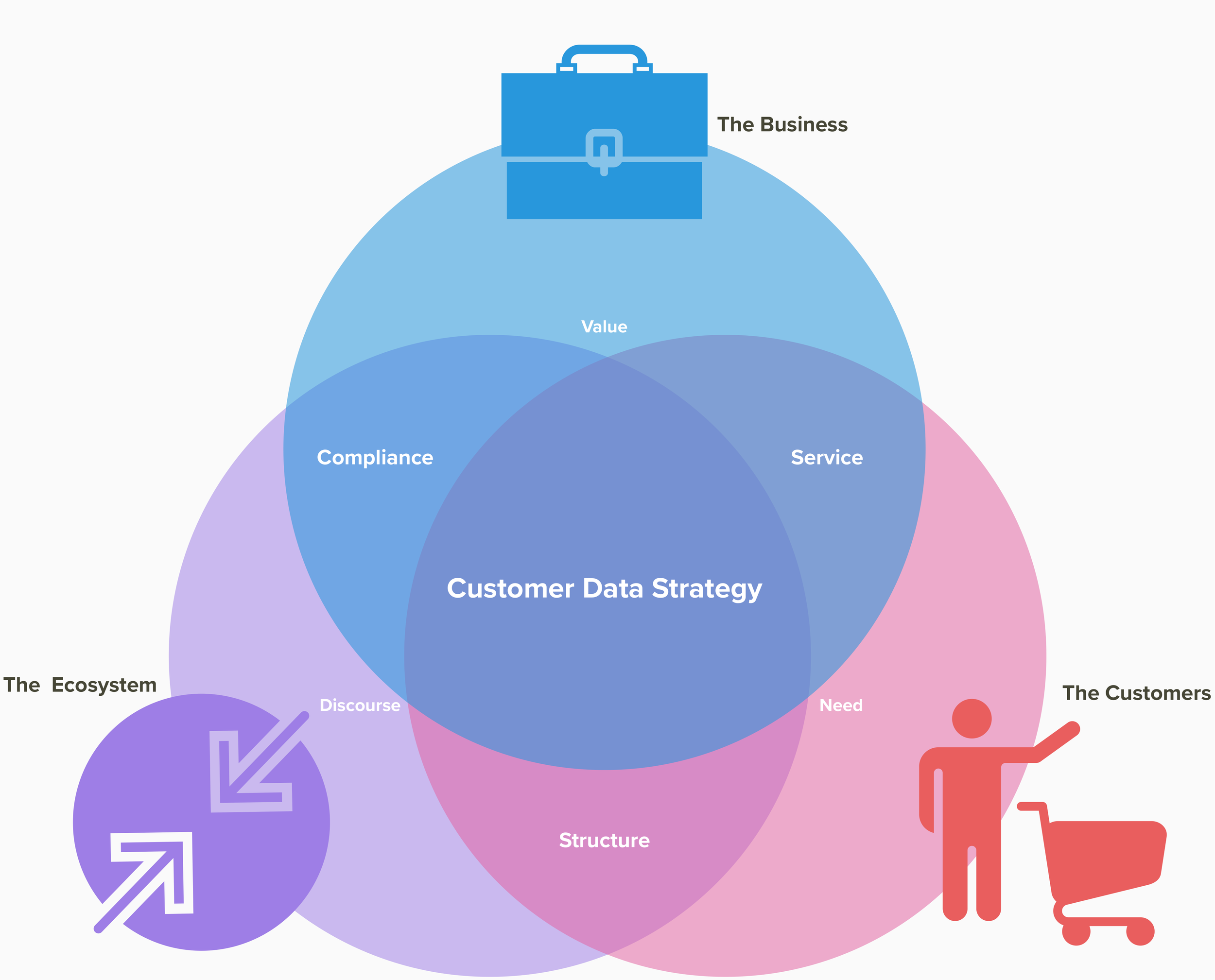
Effective customer data strategy requires understanding three interconnected elements: The Business, The Customer, and The Ecosystem. "Only by considering all three can we create a strategy that fully integrates data, meets customer needs, and complies with the operational landscape."
[Image: Mural board — abstract visual with text elements, illustrating the foundational three-element framework]
Discovery Phase ("First we diverge")
Developed for a Fortune 500 company with 420,000+ employees possessing advanced targeting systems. The discovery process involved interviewing 43 teams over approximately 64 hours, documenting data workflows and organizational structures.
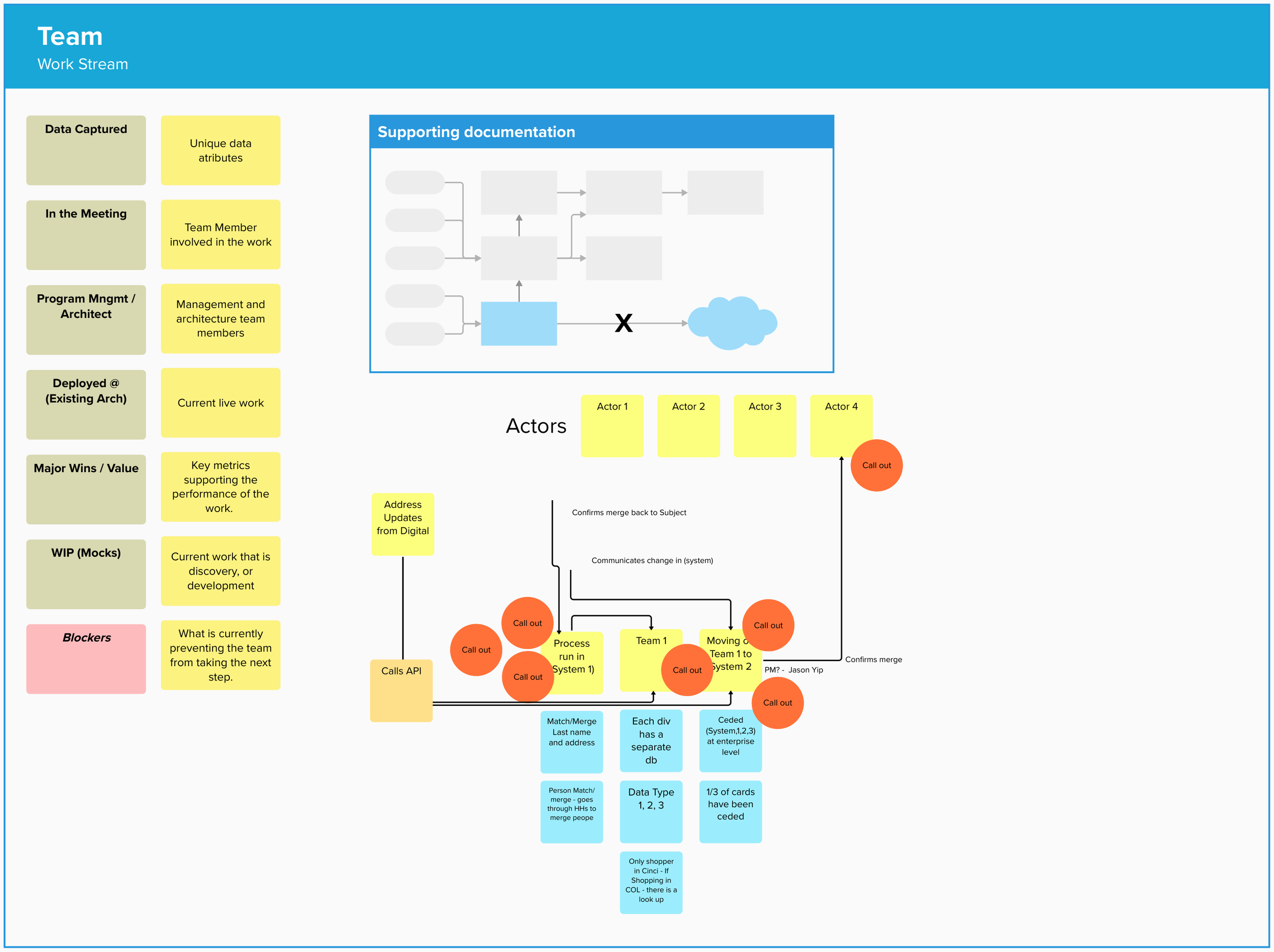
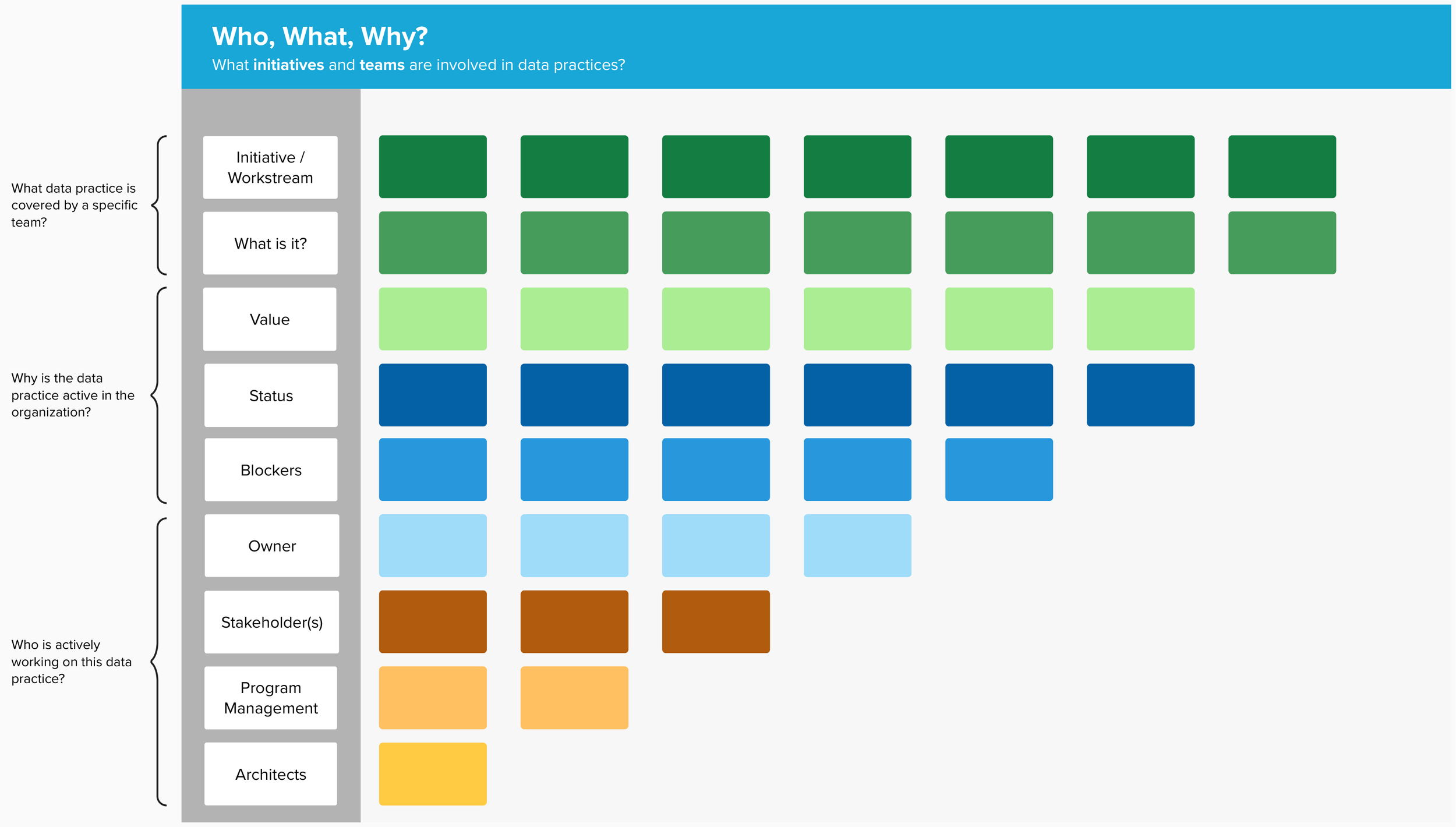
Research Methodology: Structured templates captured team composition, responsibilities, and value delivery. Visual workflows and diagrams were organized in containers to identify process blockers and opportunities.
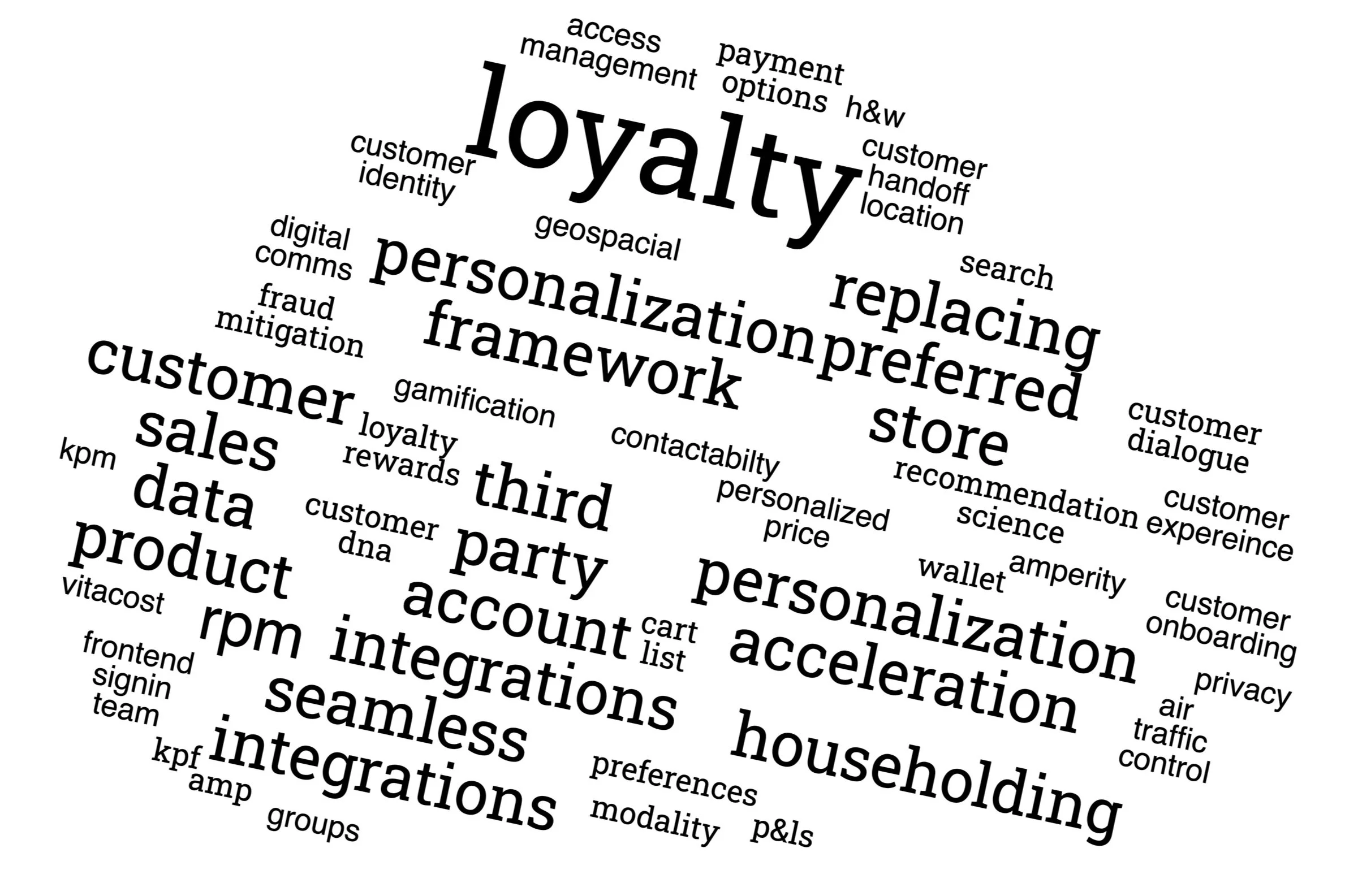
[Image: word cloud, "Many Many Many Teams" — names of the 43 interviewed teams, scaled by size]
 [Image: interview template screenshot — structured format for capturing team information]
 [Image: workflow container example — organizing images, diagrams, and process flows]
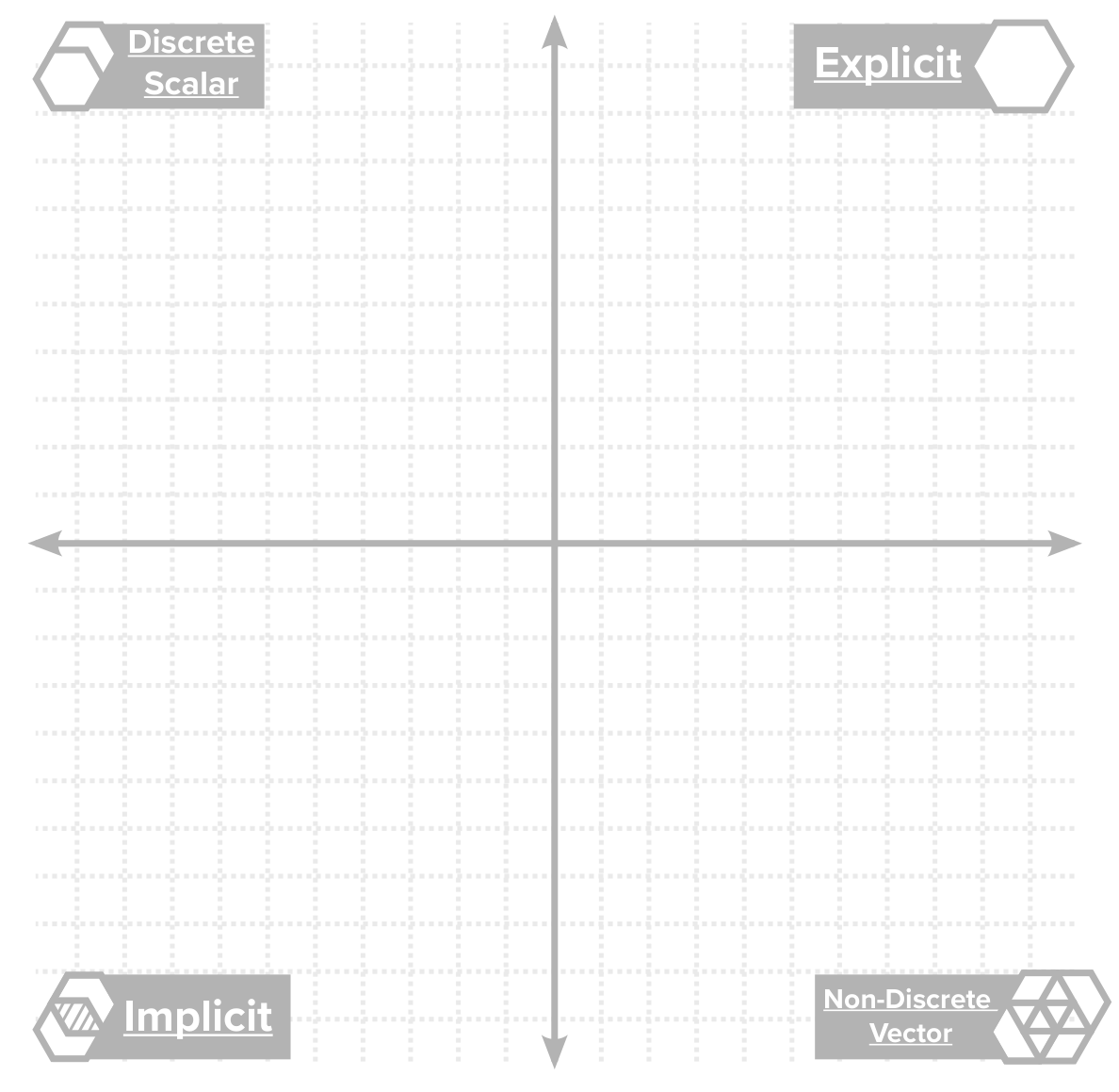
Data Classification: A two-by-two plot categorizes data types — implicit vs. explicit, discrete vs. non-discrete vector data — helping teams understand their position within the value chain.
[Image: two-by-two data classification matrix]
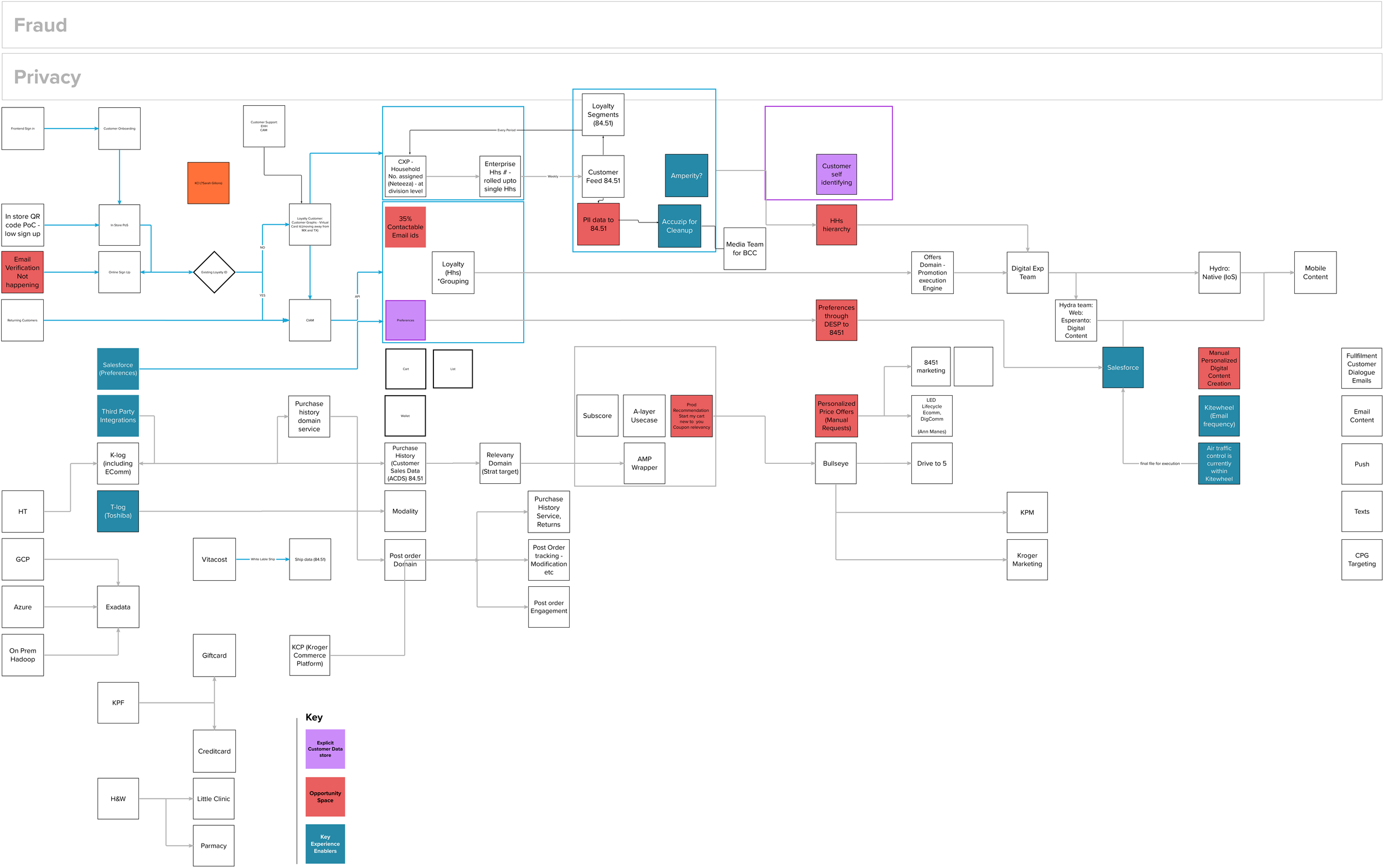
Organizational Mapping: A comprehensive diagram illustrates data flows across the organization, revealing that Privacy and Fraud teams provide system oversight and business rules.
[Image: organizational data flow diagram — team interconnections and data movement across the company]
Ecosystem Analysis
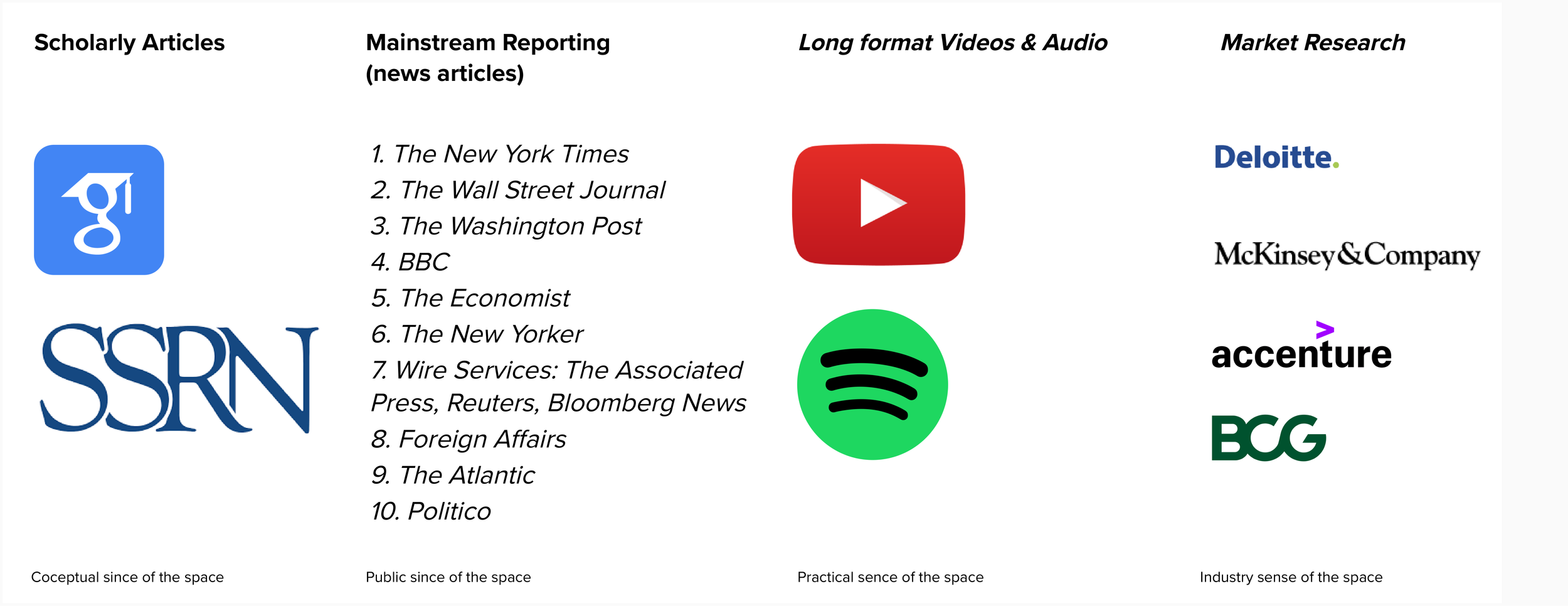
Discourse Understanding: Recommends researching through three channels — scholarly literature, journalistic reports, and audiovisual content. The goal: "consume, organize, record, and identify connections in data, continuing until plausible causation emerges."
[Image: research-channels mural — scholarly, journalistic, and audiovisual sources]
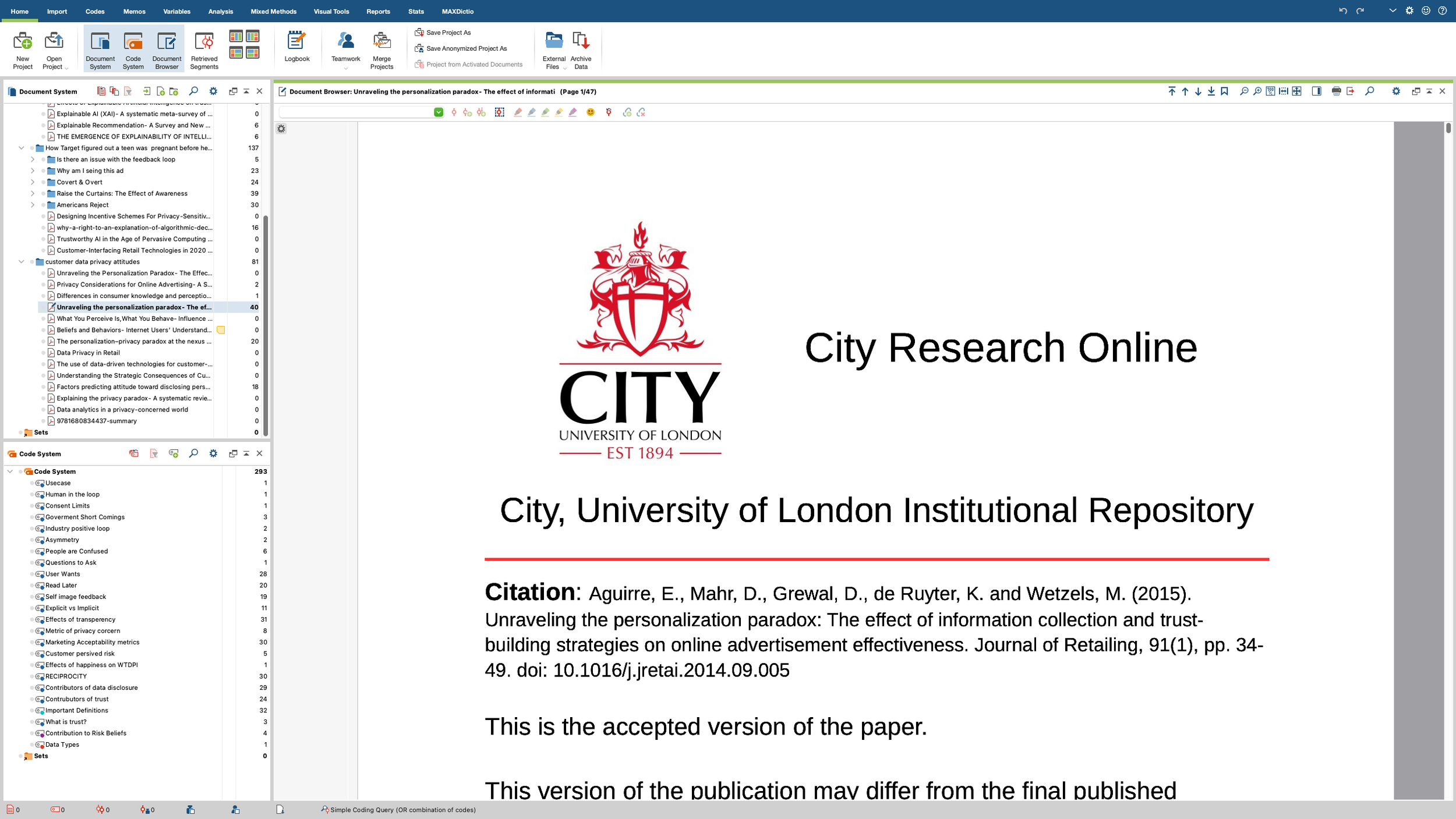
Research Tools: MAXQDA qualitative research software recommended for managing large research datasets across multiple disciplines.
[Image: MAXQDA software screenshot]
Insight Development: Emphasizes recognizing personal biases and achieving reflexivity. Research should continue "until the material begins to reference itself — that's when you know you've captured a meaningful slice of the discourse."
Strategic Framework
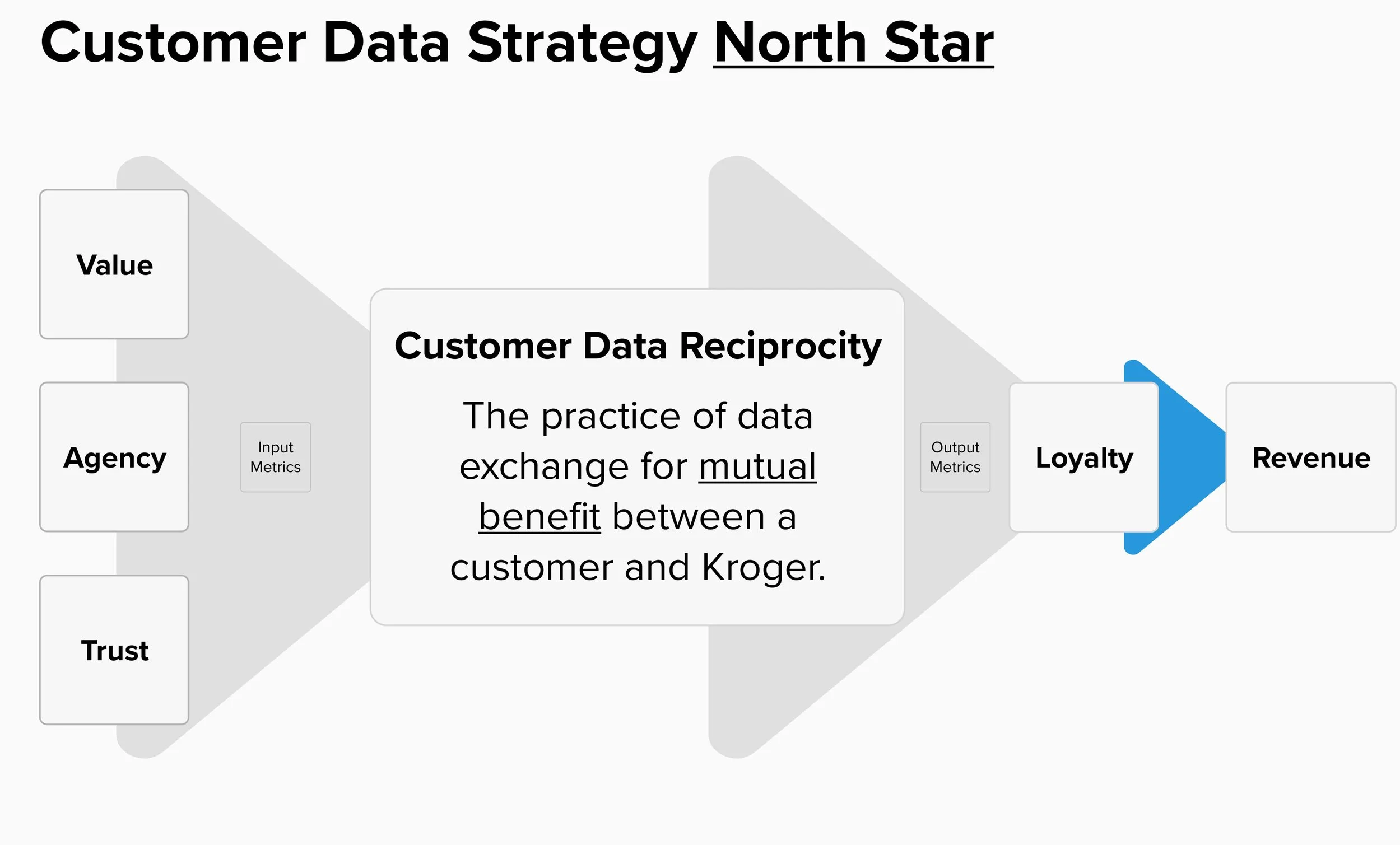
North Star Concept: "Customer Data Reciprocity: the practice of data exchange for mutual benefit between a customer and [company name]."
Key Metrics: Three input categories drive positive reciprocity: Value, Agency, and Trust.
[Image: North Star framework mural — Customer Data Reciprocity with Value, Agency, and Trust metrics]
Implementation: Leadership shifts from research to organizational steering, managing stakeholder buy-in and testing recommendations across departments.