Total Consent Design
A unified, trustworthy consent experience across products
Source: live page text at /total-consnet-design/ (real HTML text, not a slide deck; note the URL itself has a typo, "consnet").
The Customer Consent Problem
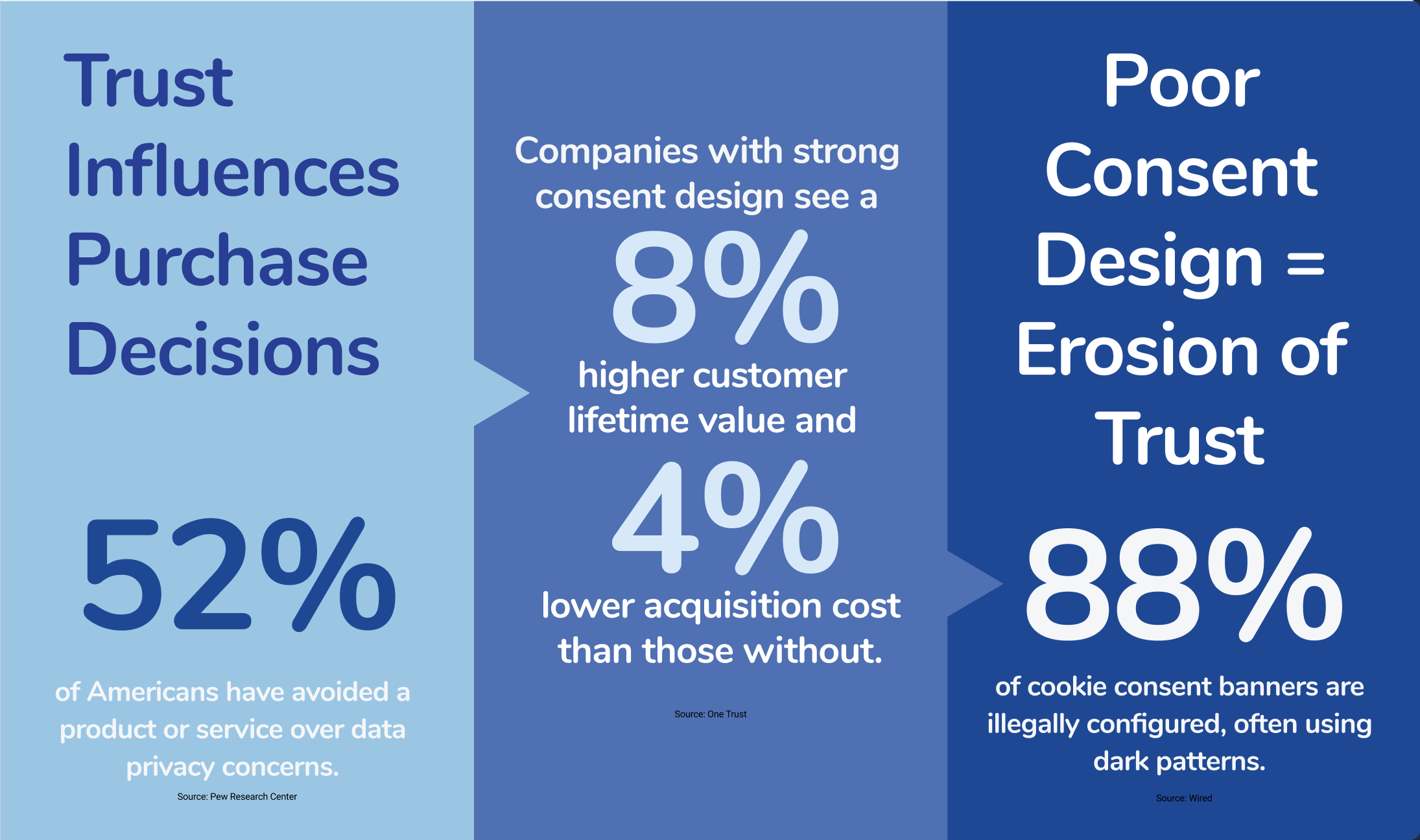
Multiple applications manage consent independently with inconsistent user agreements, creating fragmented experiences and limiting scalability. Consent forms the backbone of trusted commerce — it grants users agency over data usage while reducing legal risk and enabling compliant personalization for businesses.
Consent Vision
Future state: Trust earned through transparent choices, neutral design and language, self-serve management capabilities, and educational guidance. Four core goals:
- Easy: Low-friction flows
- Understandable: Plain language with contextual explanations
- Consistent: Standardized patterns across products
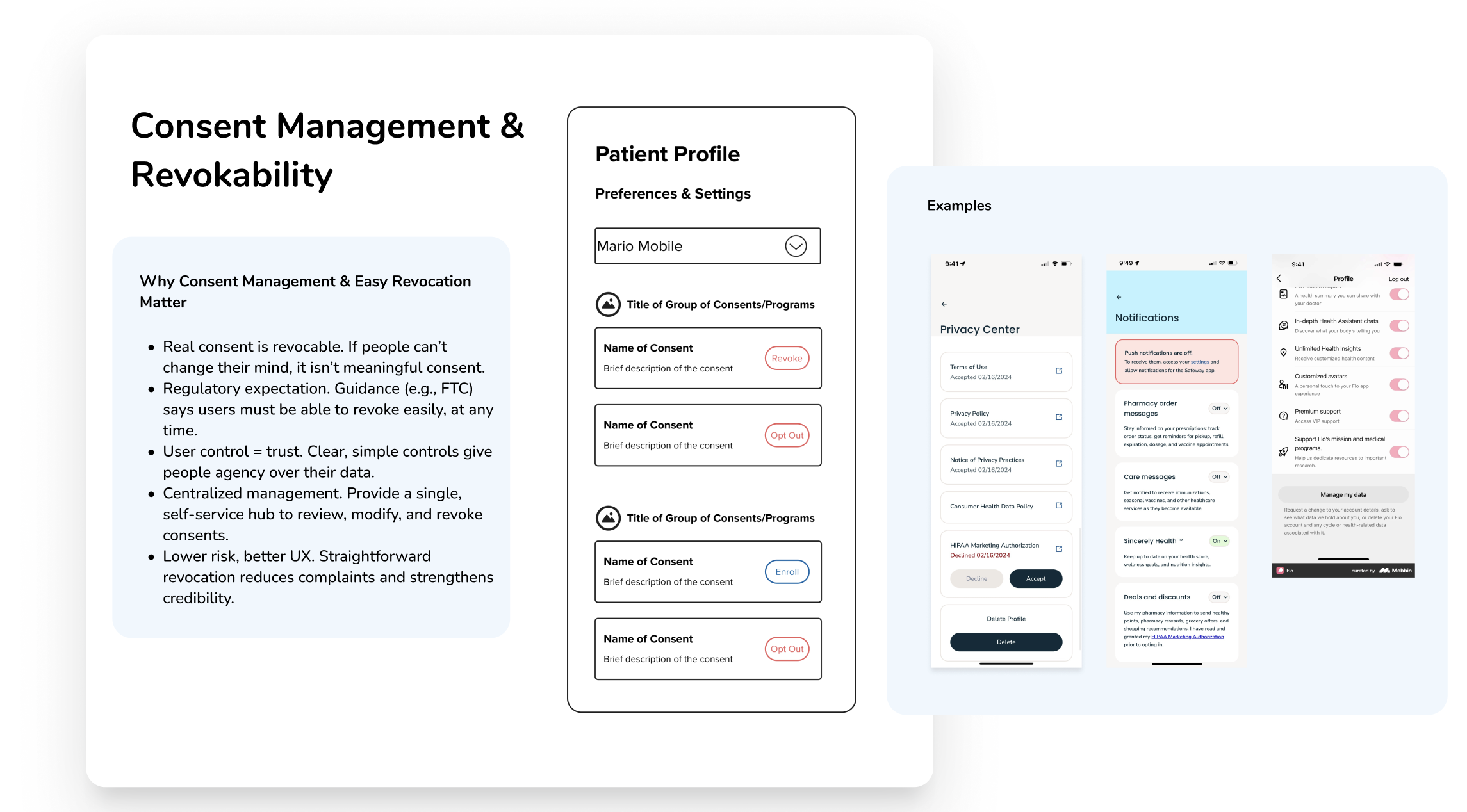
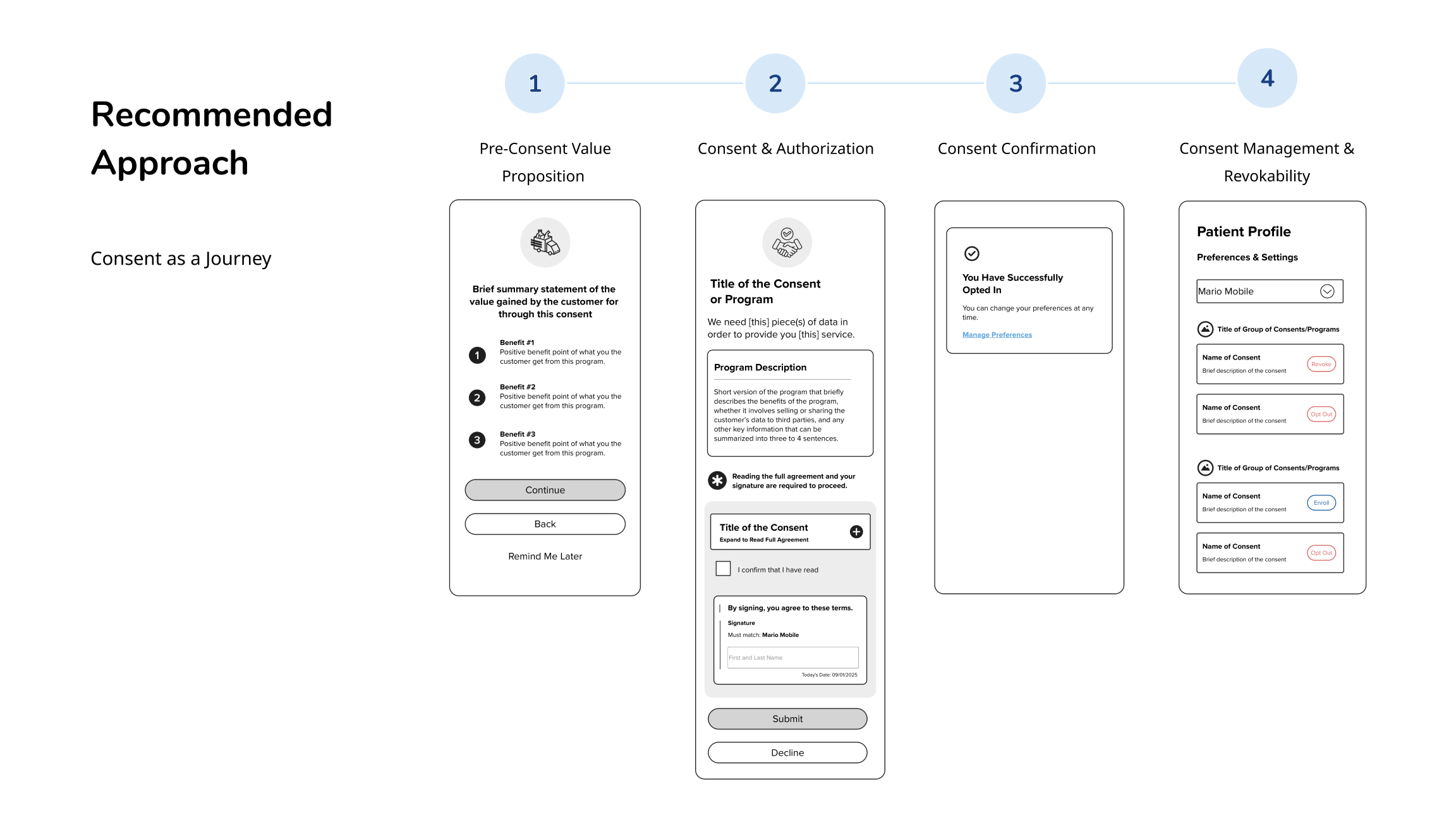
- Manageable & Revokable: Self-service dashboards with one-click revocation
Why This Matters
- Rapidly evolving privacy regulations requiring business flexibility
- Growing customer awareness and concern about data usage
- Erosion of trust when privacy practices lack transparency
Research
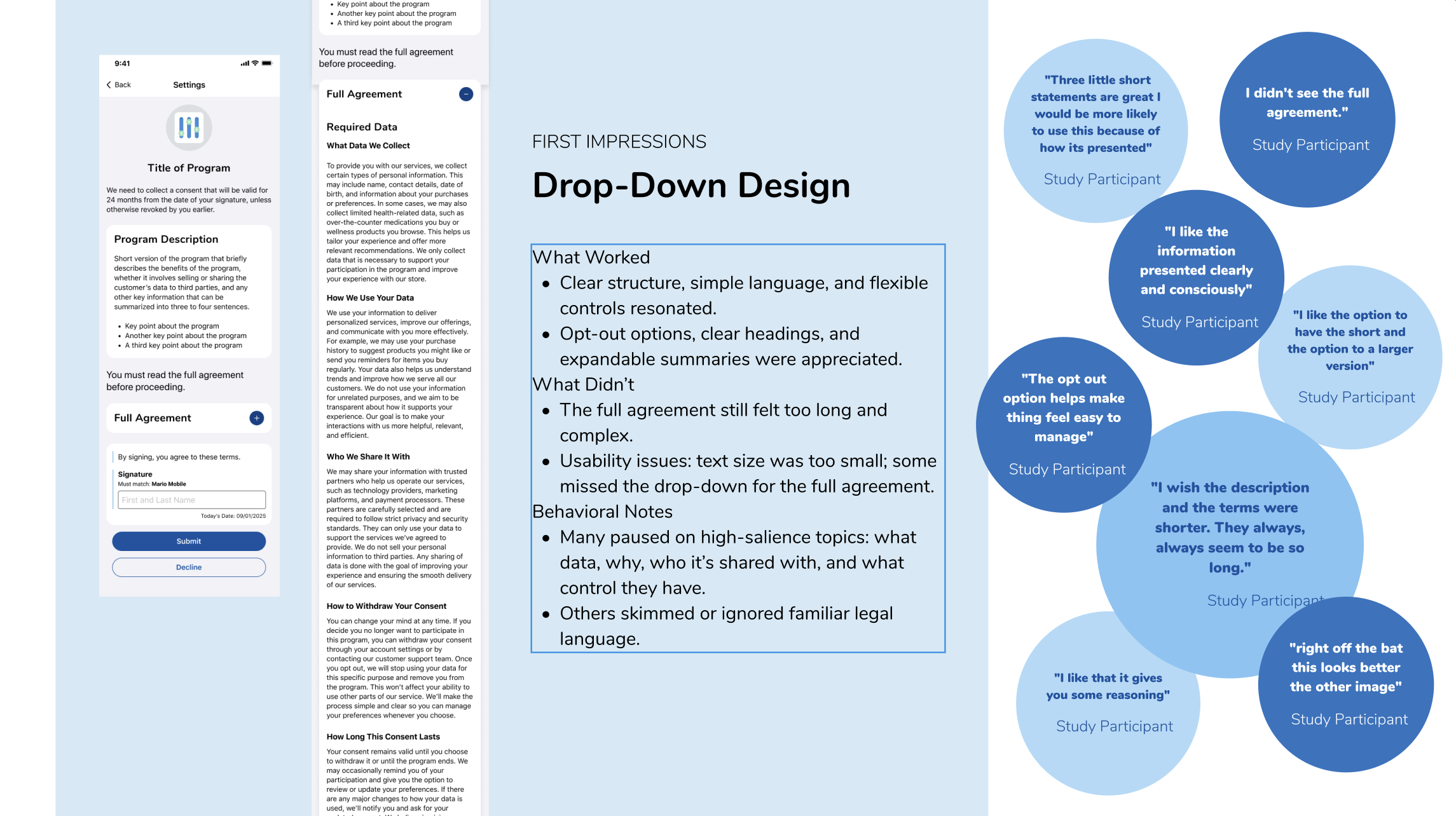
Mixed-methods usability test with 102 participants using a think-aloud protocol. Researchers evaluated three design alternatives and collected post-session surveys measuring risk tolerance and privacy stance. Methodology: Usability test + attitudinal survey. Think-aloud interactions with three designs. Sample size: 102 participants. Measures: qualitative observations, task feedback, risk/privacy profiles. Analysis: cross-design theme comparison segmented by user profiles.
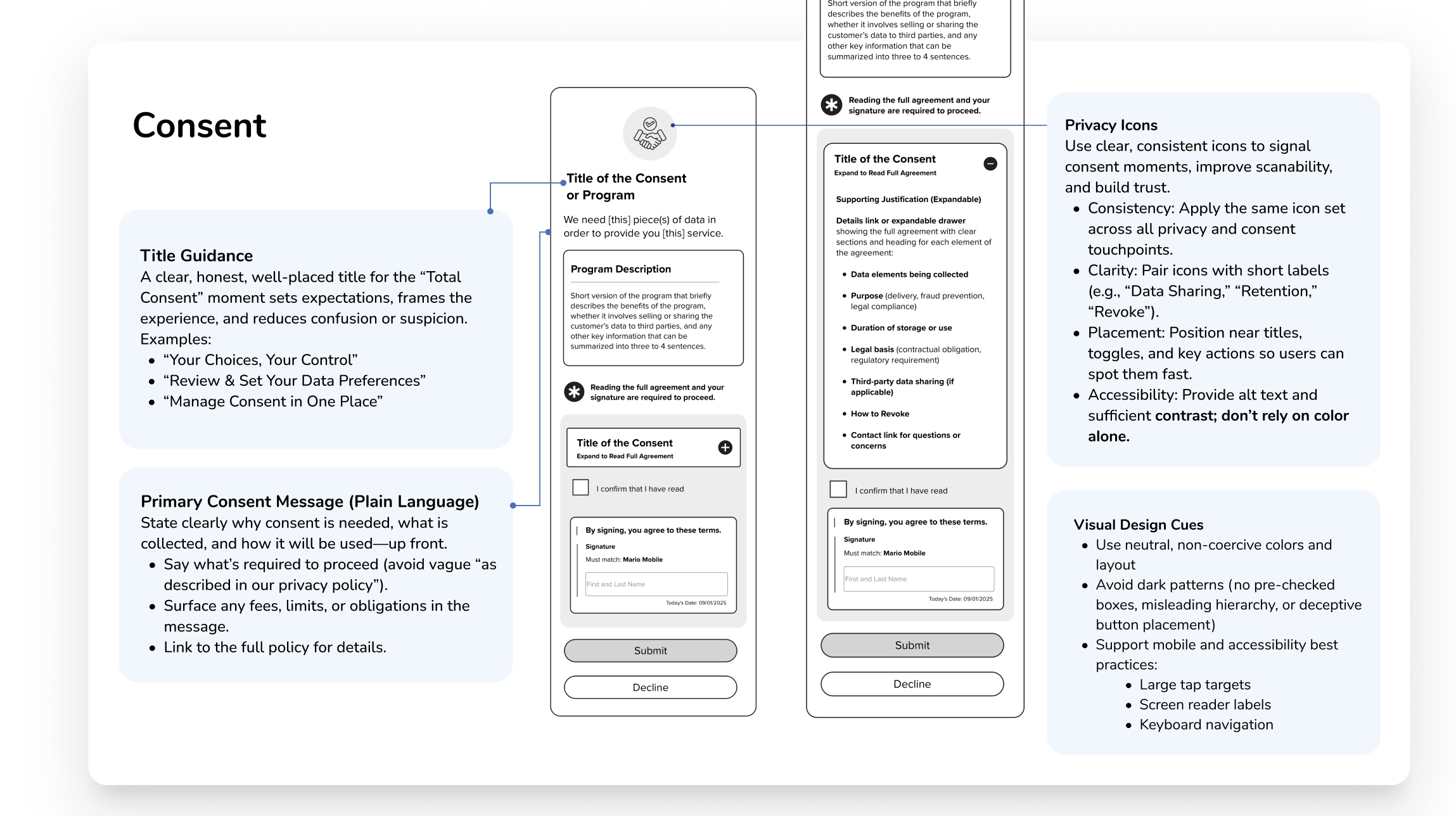
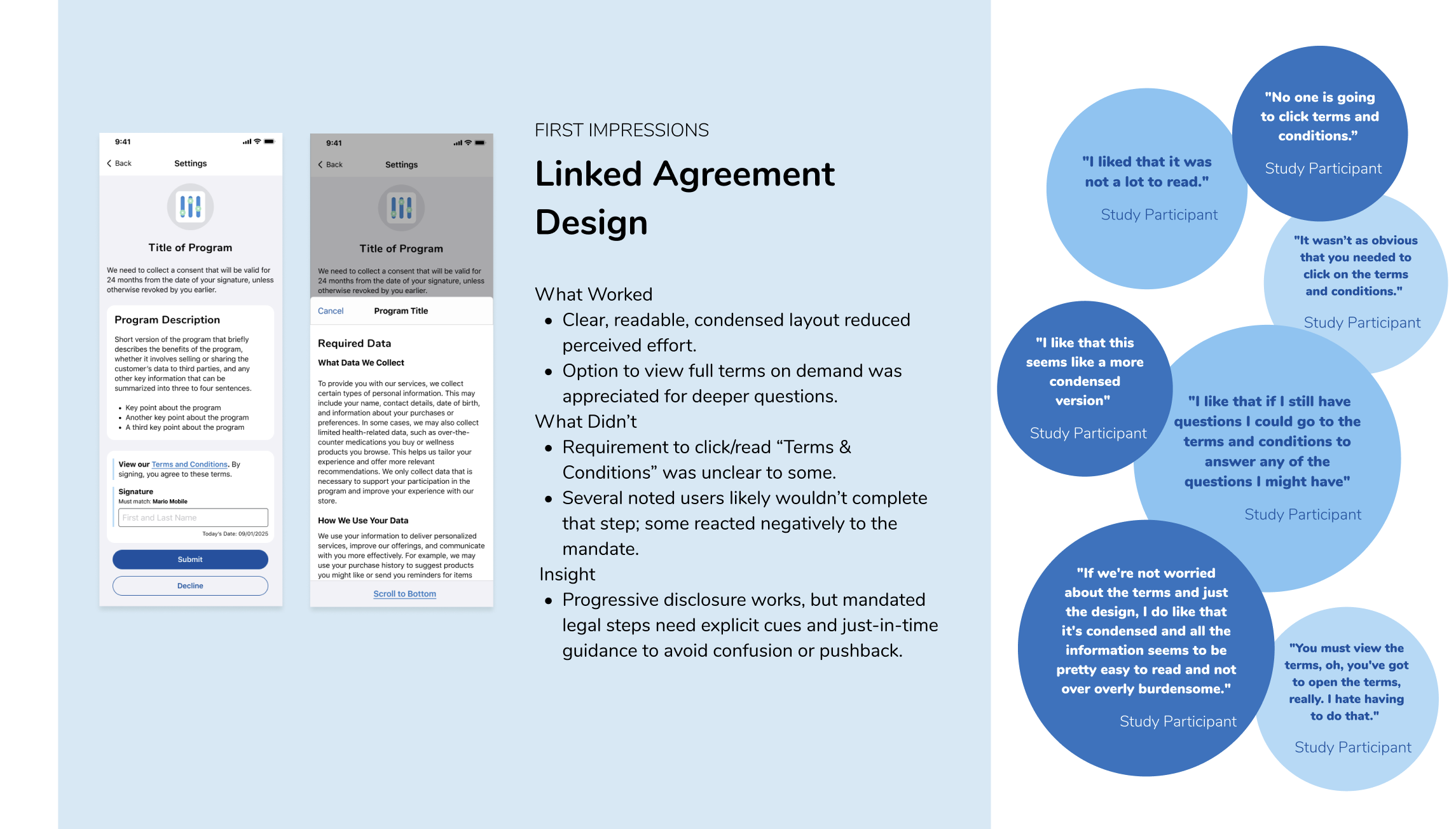
[Images 1–5: screenshots of the three consent design prototypes tested — different layout approaches, toggle mechanisms, information hierarchies]
Key Themes
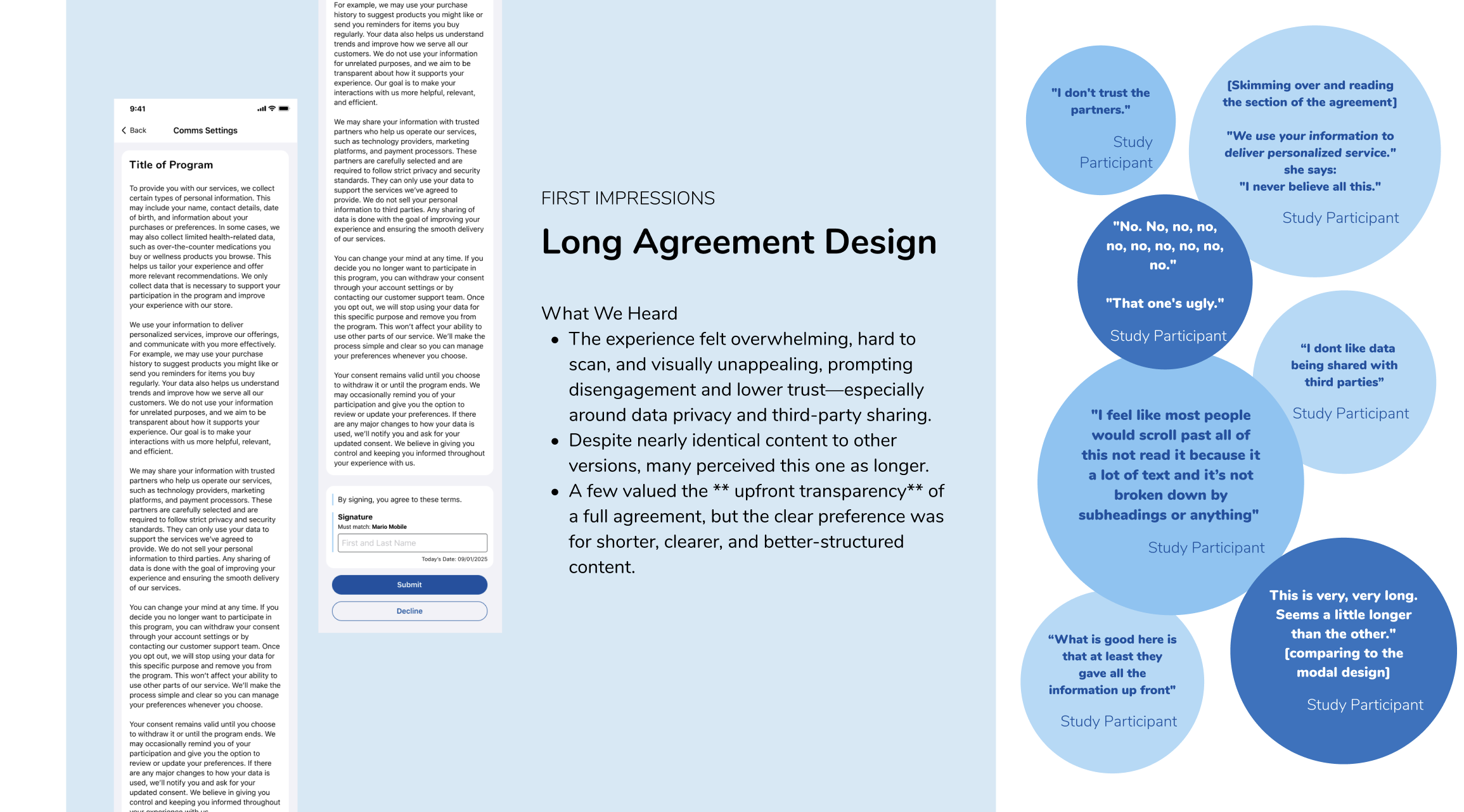
- Agreement Engagement: Users accept lengthy agreements without reading, describing them as "blanket" or "rubber-stamp" approvals.
- Control & Self-Service: Strong demand for granular toggles (communication, data-sharing settings) and easily adjustable preferences.
- Consent Management Usability: Toggle-based controls performed well — intuitive, comprehensive, straightforward for preference updates.
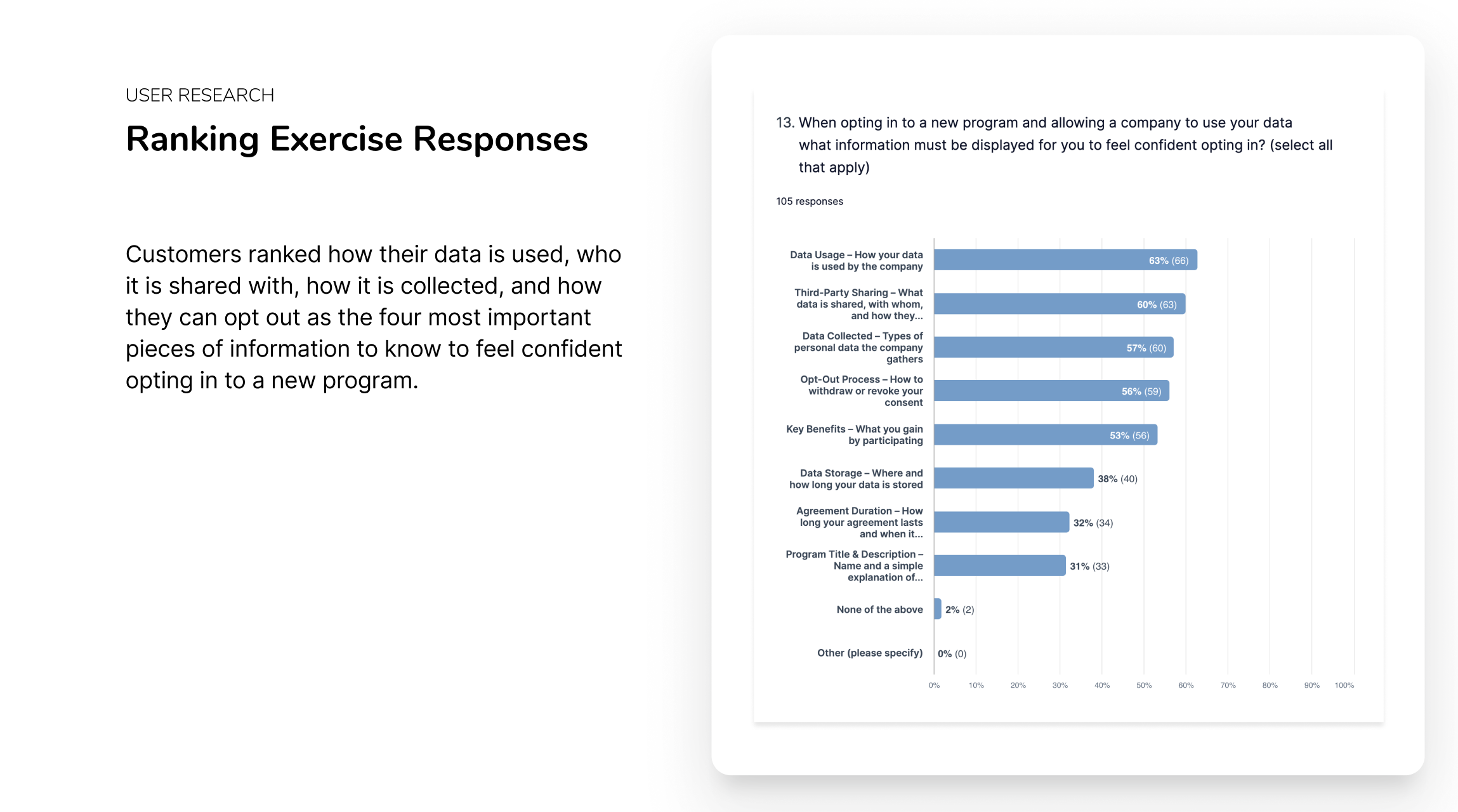
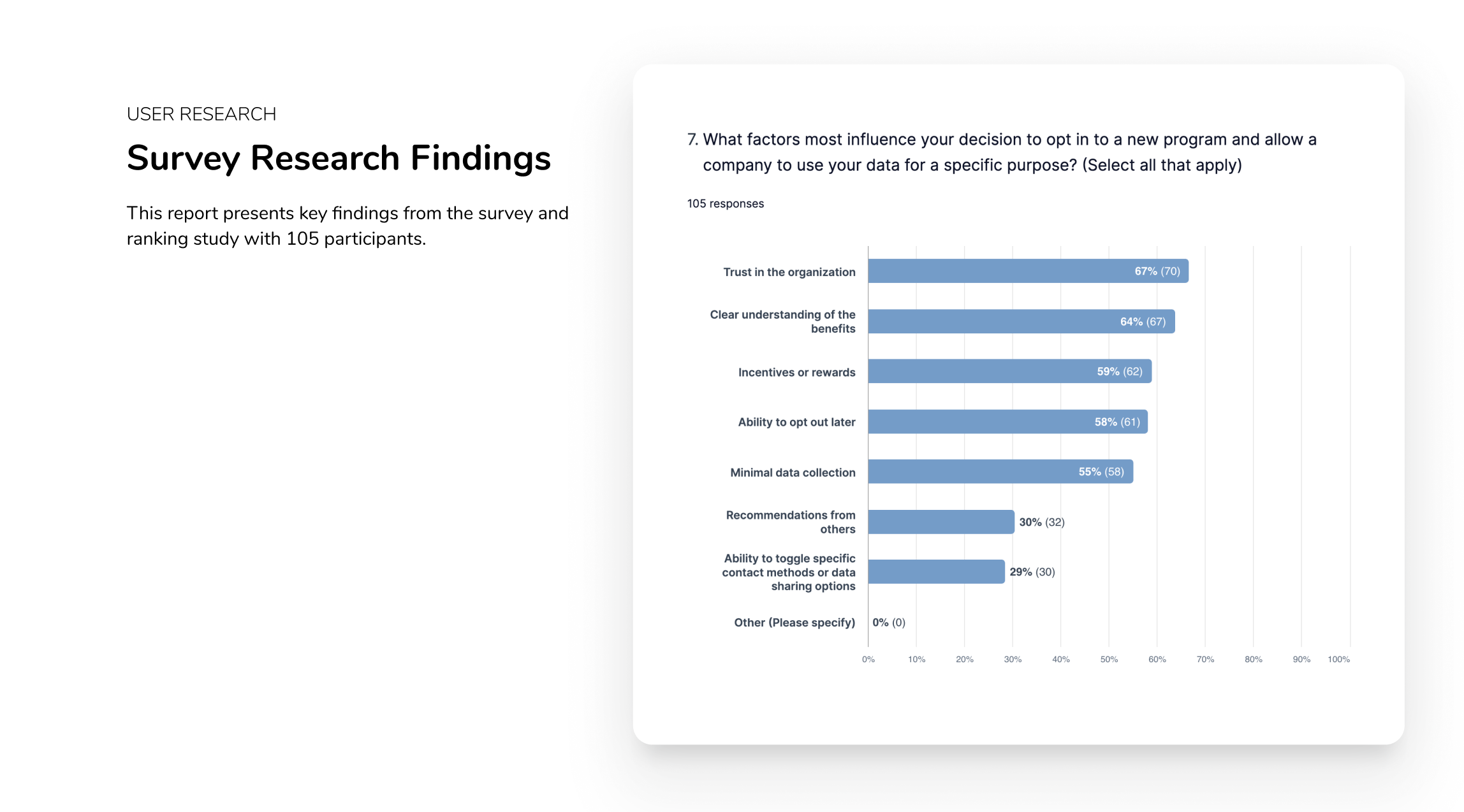
- Data-Sharing Anxiety: Third-party sharing generates significant concern; participants expressed uncertainty about actual consent scope.
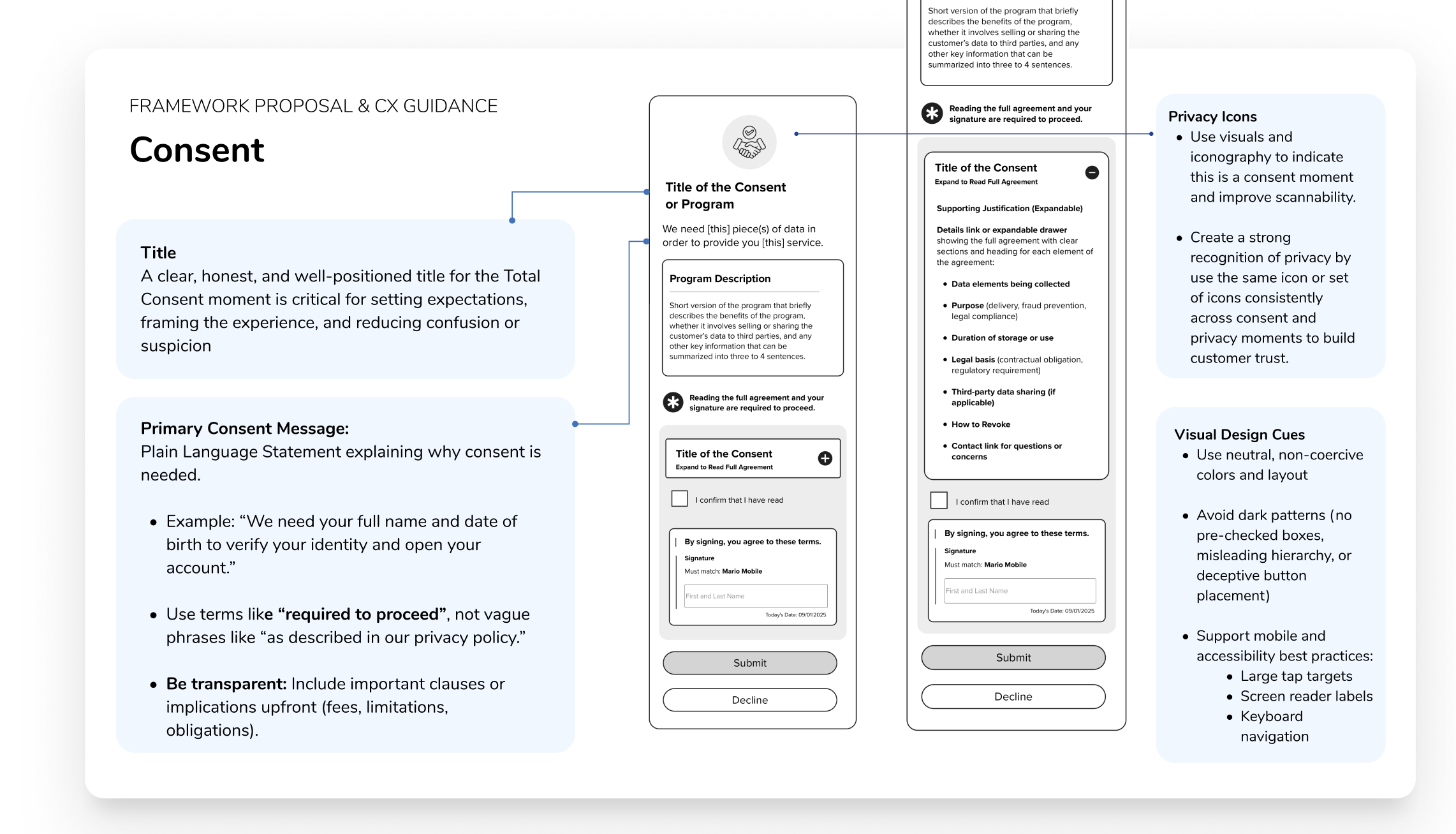
- Clarity Drives Trust: Vague or overly complex language undermines confidence; users prefer plain, specific terminology.
- Context Matters: Information needs vary by scenario (initial setup vs. later management, agreement complexity) — designs should adapt detail levels accordingly.
Outcomes of Better Consent
Trust improvement: Seeing third-party sharing details improved trust for 91% of study respondents. Brand loyalty: Easy ways to update or revoke sharing preferences positively impact loyalty for 84% of respondents. Reduced complexity: Streamlined flows lower customer frustration and legal exposure. Scalability: Standardized, modular patterns enable rapid regulatory adaptation and faster feature delivery.
Future Consent Model
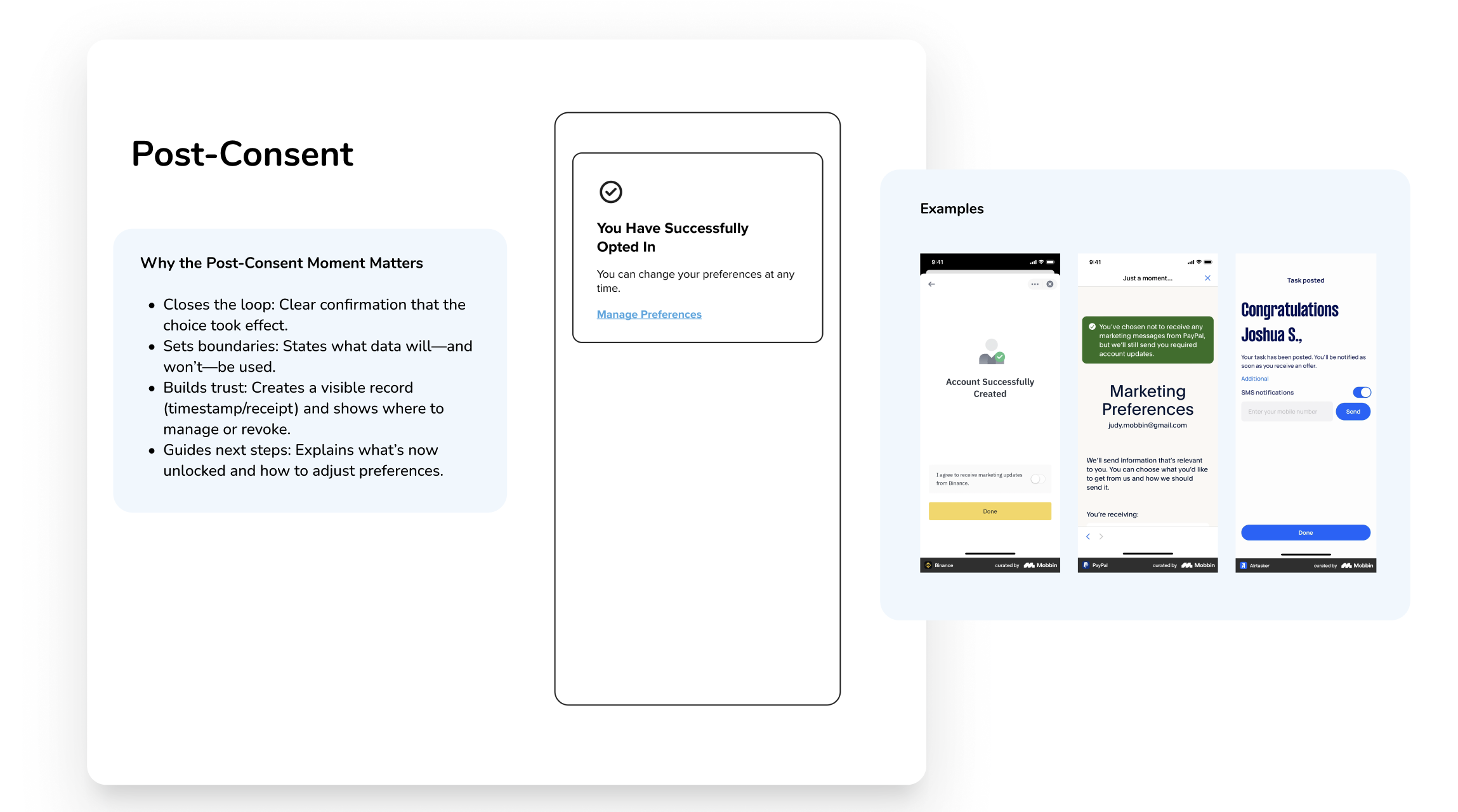
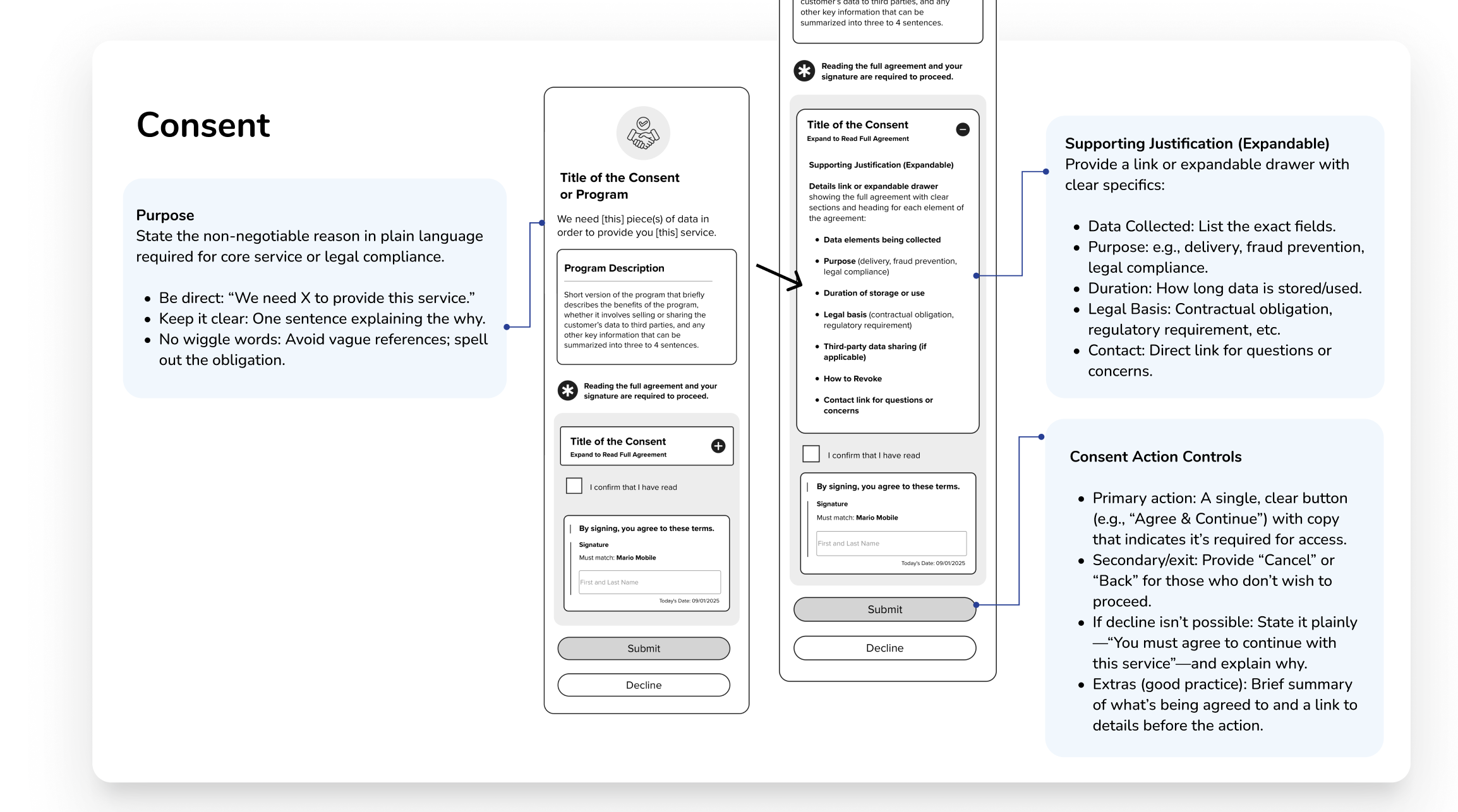
[Images 6–11: six wireframes/mockups depicting the proposed consent framework — a phased model progressing from initial consent flows through management dashboards, granular preference controls, and revocation interfaces; clean information architecture, toggle-based selections, clarity-focused microcopy]
Summary
Consent design framed as a business and UX imperative, grounded in empirical research showing demand for transparency, control, and simplicity in how personal data is governed.
Additional photos