Xpand
A knowledge-sharing platform that turns time into currency
Source: squarespace-export/images/xpand/001.JPG–028.JPG (28 slides). SCAD student project (research citations reference library.scad.edu; demo data set in Savannah, GA).
Suggested title & subtitle
Title: Xpand Subtitle (synthesized, not a verbatim quote — no tagline slide exists): A knowledge-sharing platform that turns time into currency, helping socially anxious people trade skills, build confidence, and connect face-to-face.
Hero (slide 001)
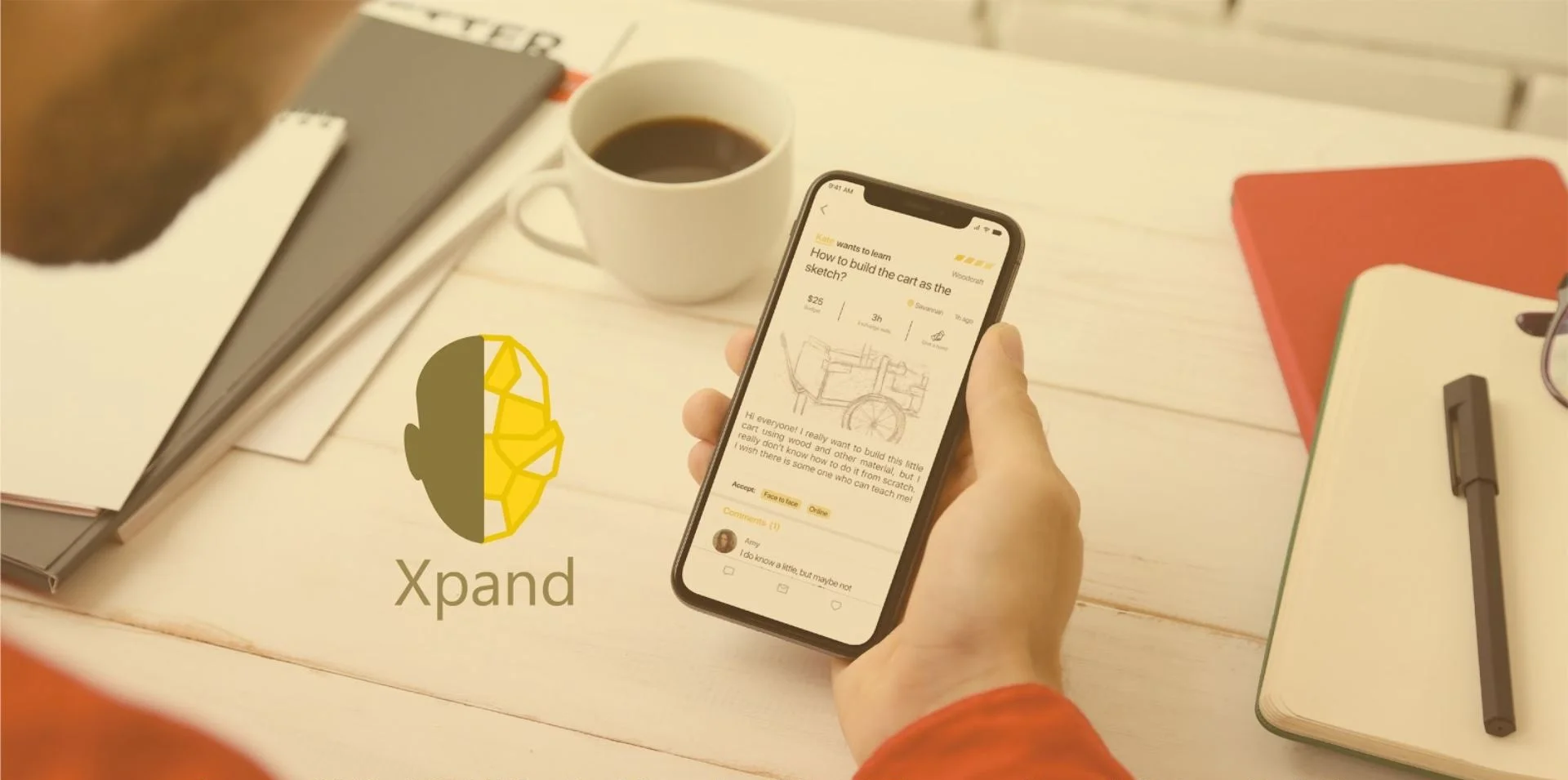 Overhead desk photo, phone mockup showing the core app interaction: a post from "Kate wants to learn — How to build the cart as the sketch?" Budget "$25," "3h" exchange rate, tag "Woodcraft," location "Savannah," posted "1h ago," "Accept: Face to face / Online," comment thread. Post body: "Hi everyone! I really want to build this little cart using wood and other material, but I really don't know how to do it from scratch. I wish there is someone who can teach me!" — the clearest example of the core product loop; good hero anchor.
The Problem / Why This Matters (slides 002, 006–012)
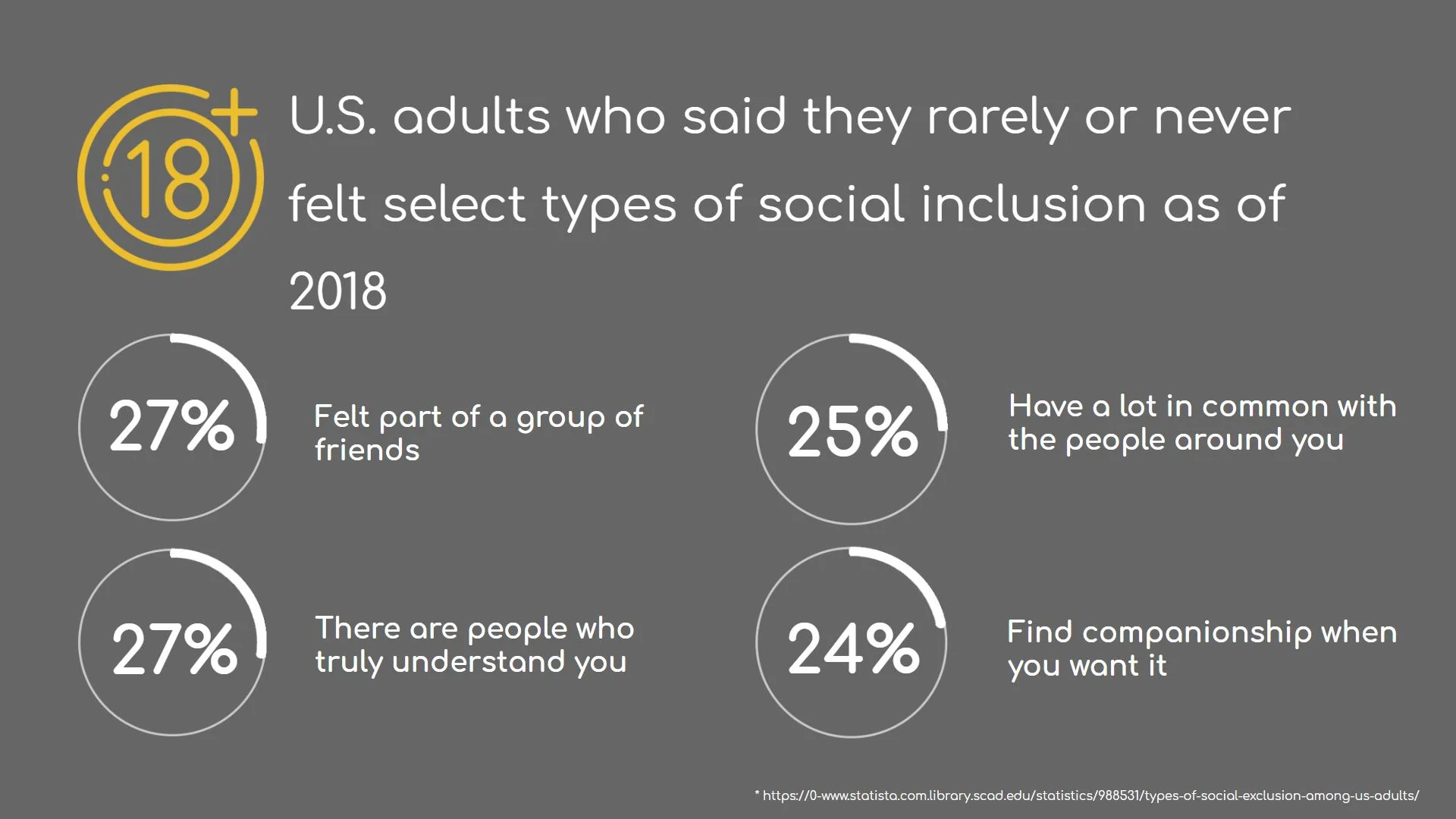
 Mostly stat callouts rather than prose.
U.S. adults who rarely/never felt select types of social inclusion, 2018 (slide 002): 27% part of a group of friends; 25% have a lot in common with people around them; 27% there are people who truly understand you; 24% find companionship when wanted. (Source: Statista via SCAD library.)
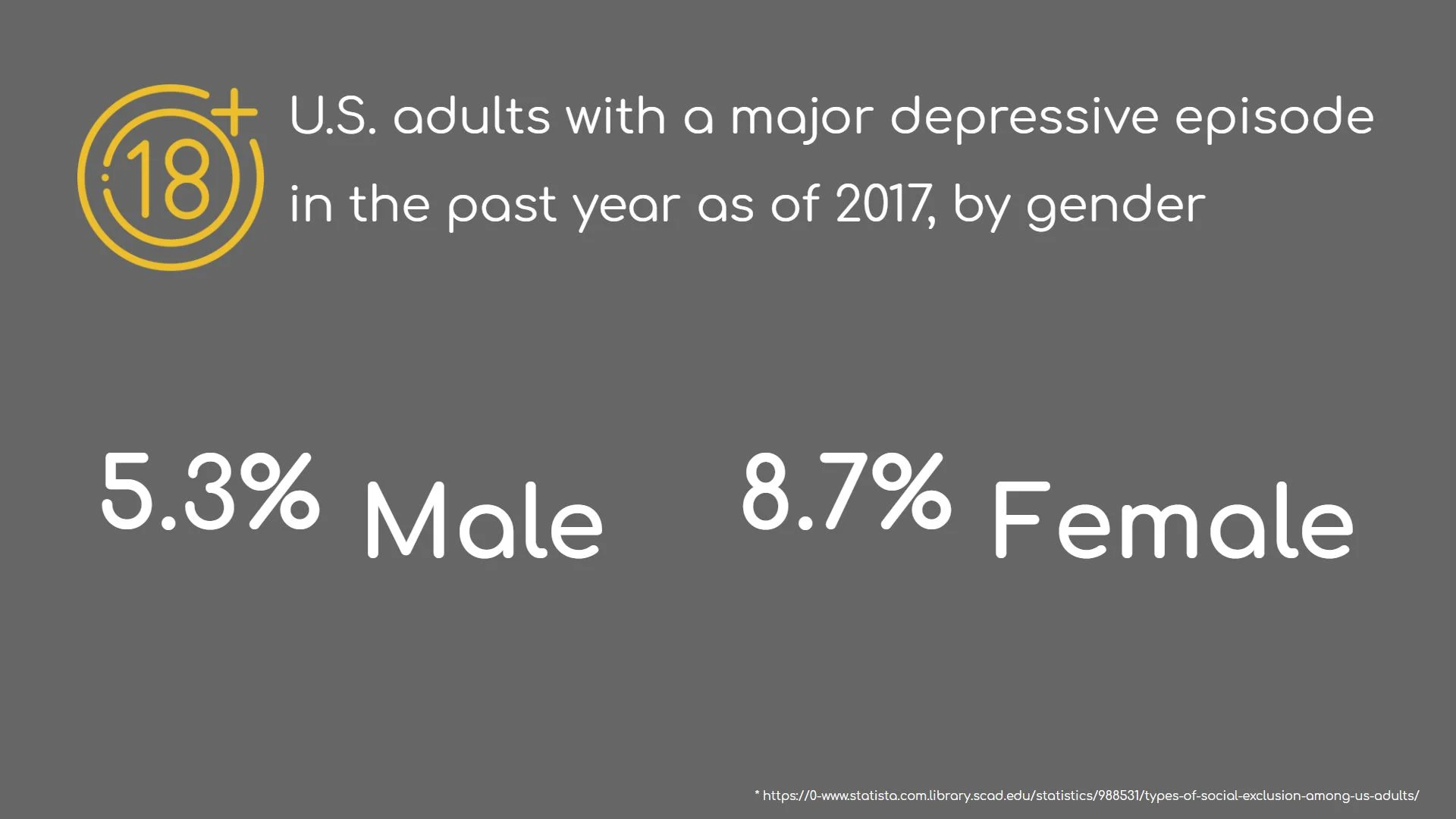
U.S. adults with a major depressive episode in the past year, 2017, by gender (slide 006): 5.3% Male, 8.7% Female.
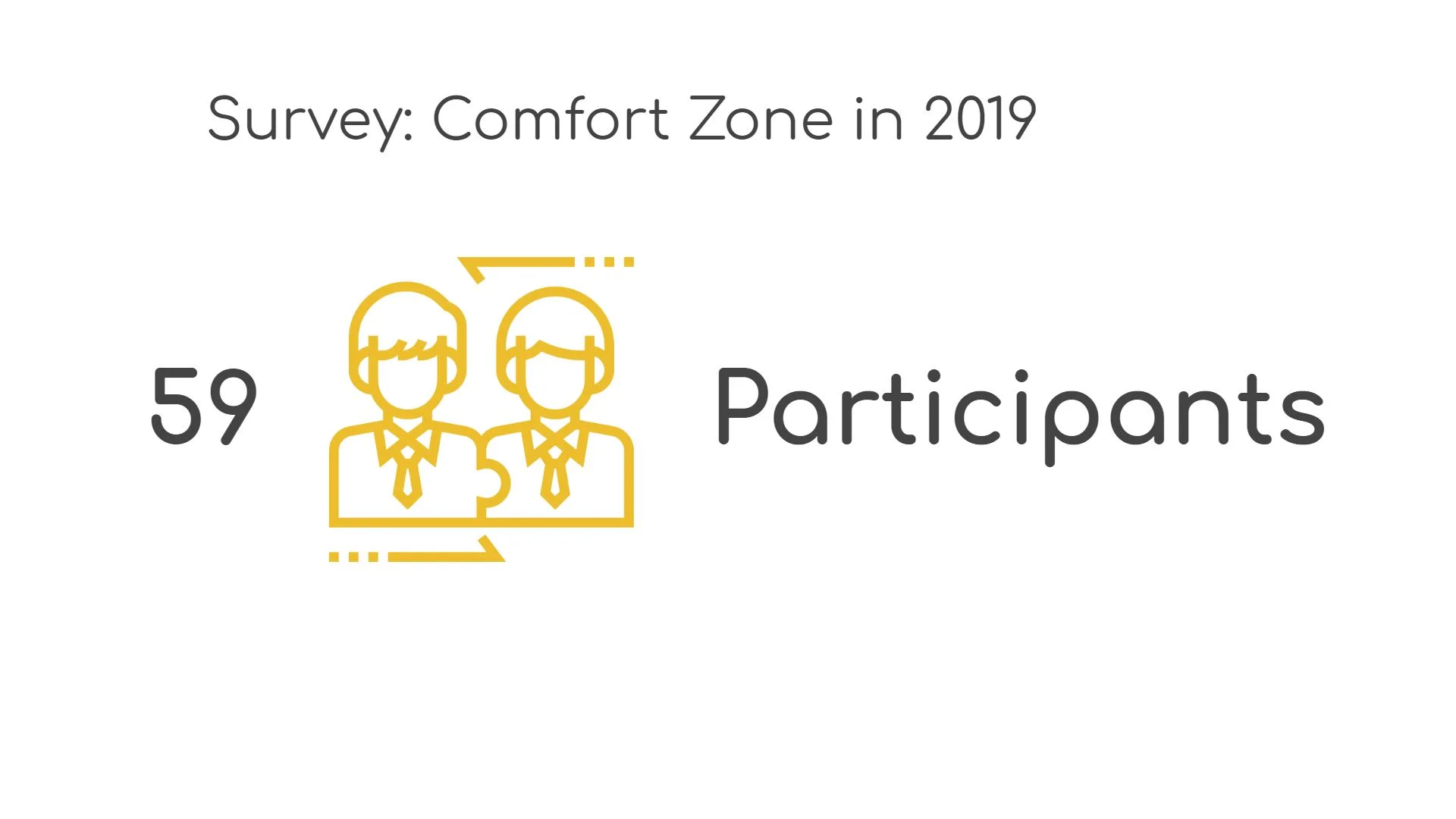
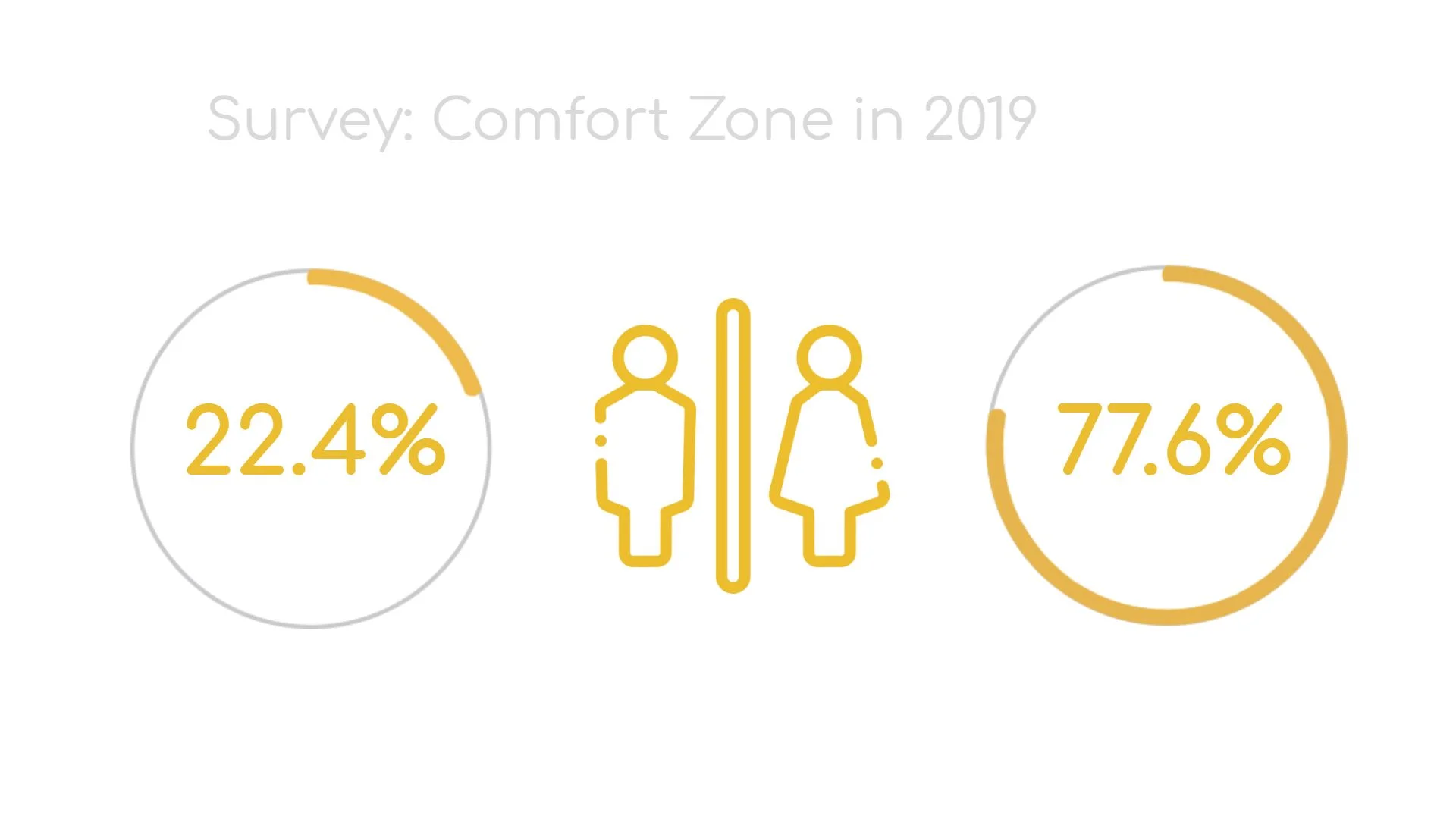
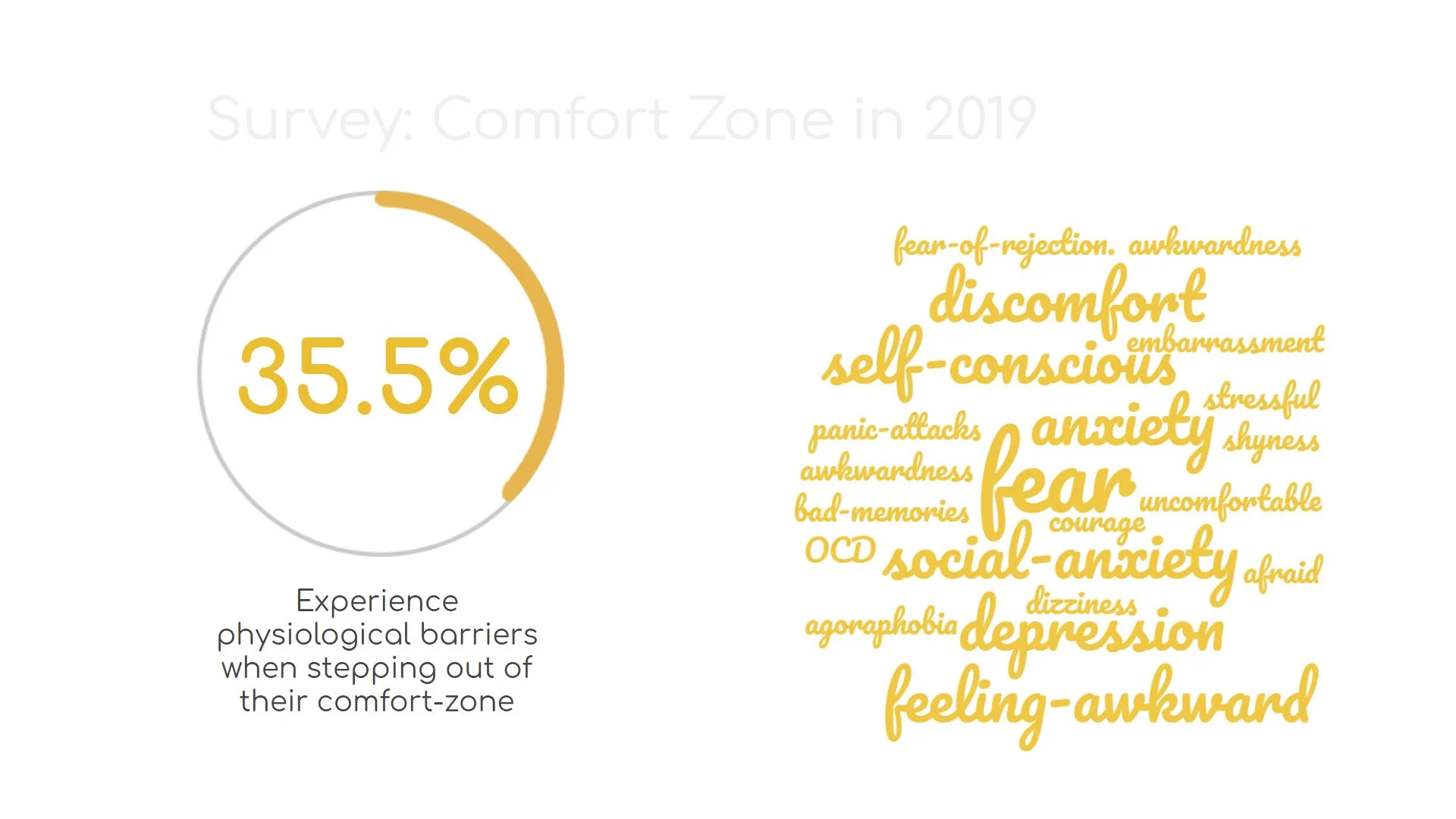
Survey: Comfort Zone 2019 (slides 007–009): 59 participants. 22.4%/77.6% split (gender mapping inferred, not labeled). 35.5% "Experience physiological barriers when stepping out of their comfort-zone," paired with an emotion word cloud: fear-of-rejection, awkwardness, discomfort, embarrassment, self-conscious, stressful, shyness, panic-attacks, anxiety, fear (largest), uncomfortable, bad-memories, courage, OCD, social-anxiety, afraid, agoraphobia, dizziness, depression, feeling-awkward.
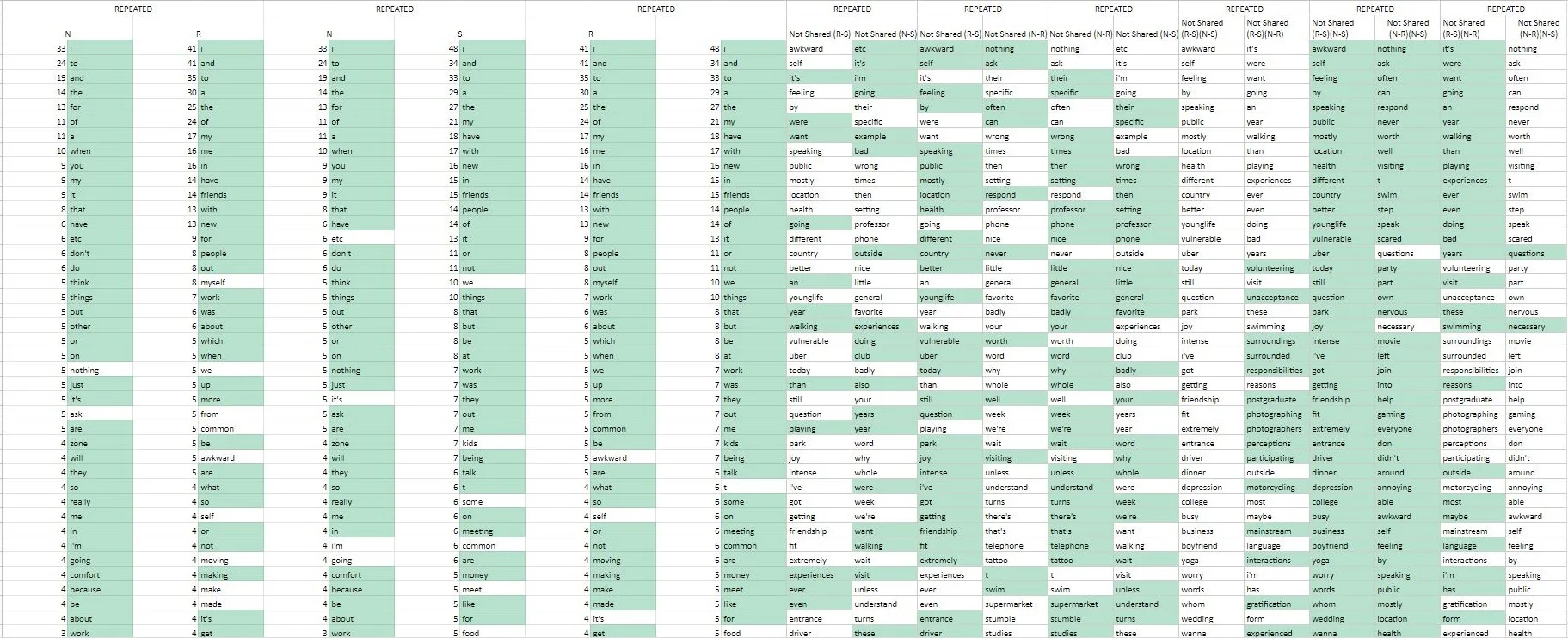
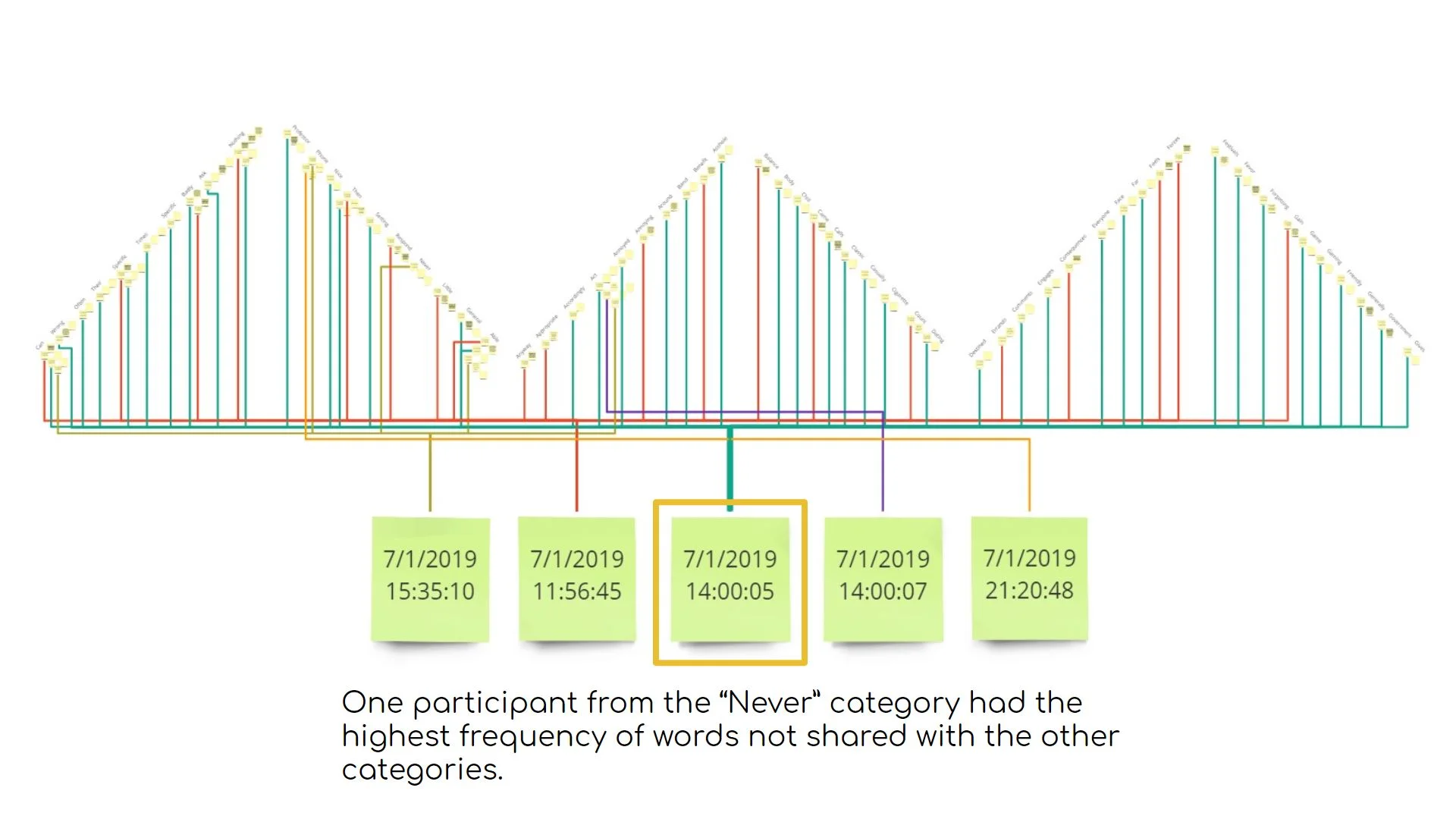
Linguistic/word-frequency analysis (slide 010): "One participant from the 'Never' category had the highest frequency of words not shared with the other categories." (Slides 011–012 are raw word-frequency spreadsheets — backing data, not site copy.)
Research: Landscape Mapping & User Journey (slides 003–004)
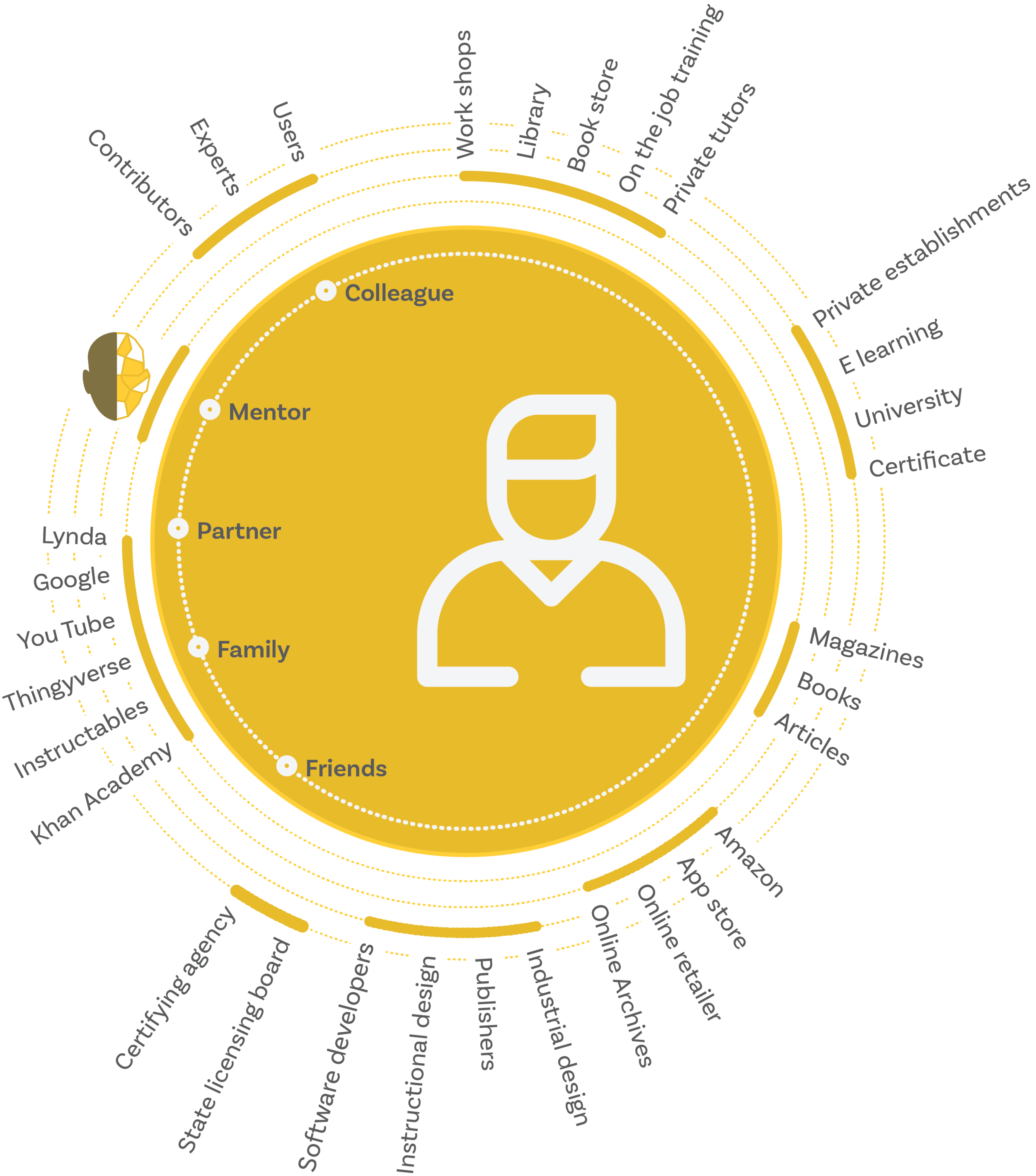
Resource/ecosystem map (003): circular diagram of everywhere people currently go to learn/teach skills — Colleague/Mentor/Partner/Family/Friends (inner), and outer clusters: Contributors/Experts/Users; Workshops/Library/Book store/On the job training/Private tutors; Private establishments/E learning/University/Certificate; Magazines/Books/Articles; Amazon/App store/Online retailer/Online Archives; Industrial design/Publishers/Instructional design/Software developers/State licensing board/Certifying agency; Khan Academy/Instructables/Thingiverse/YouTube/Google/Lynda. A competitive/alternative-solutions landscape map.
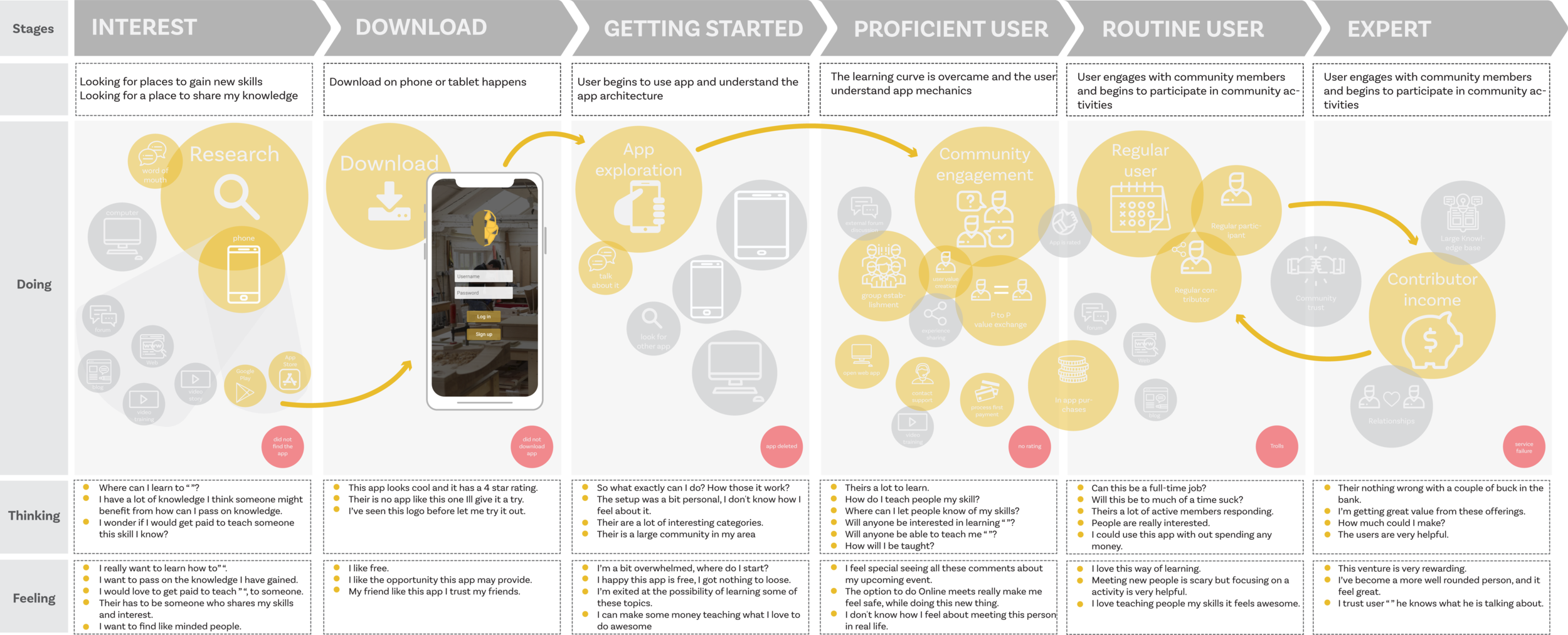
Customer journey map (004): six stages — Interest → Download → Getting Started → Proficient User → Routine User → Expert — with Doing/Thinking/Feeling rows. Sample thinking quotes: "Where can I learn to ''?", "So what exactly can I do? How does it work?", "Can this be a full-time job?" Sample feeling quotes: "I really want to learn how to ''.", "I'm a bit overwhelmed, where do I start?", "I love this way of learning." Drop-off points noted: "did not find the app," "did not download app," "app deleted," "no rating," "trolls," "severe failure." Strong candidate for a reproduced diagram.
Early Product Preview (slide 005)
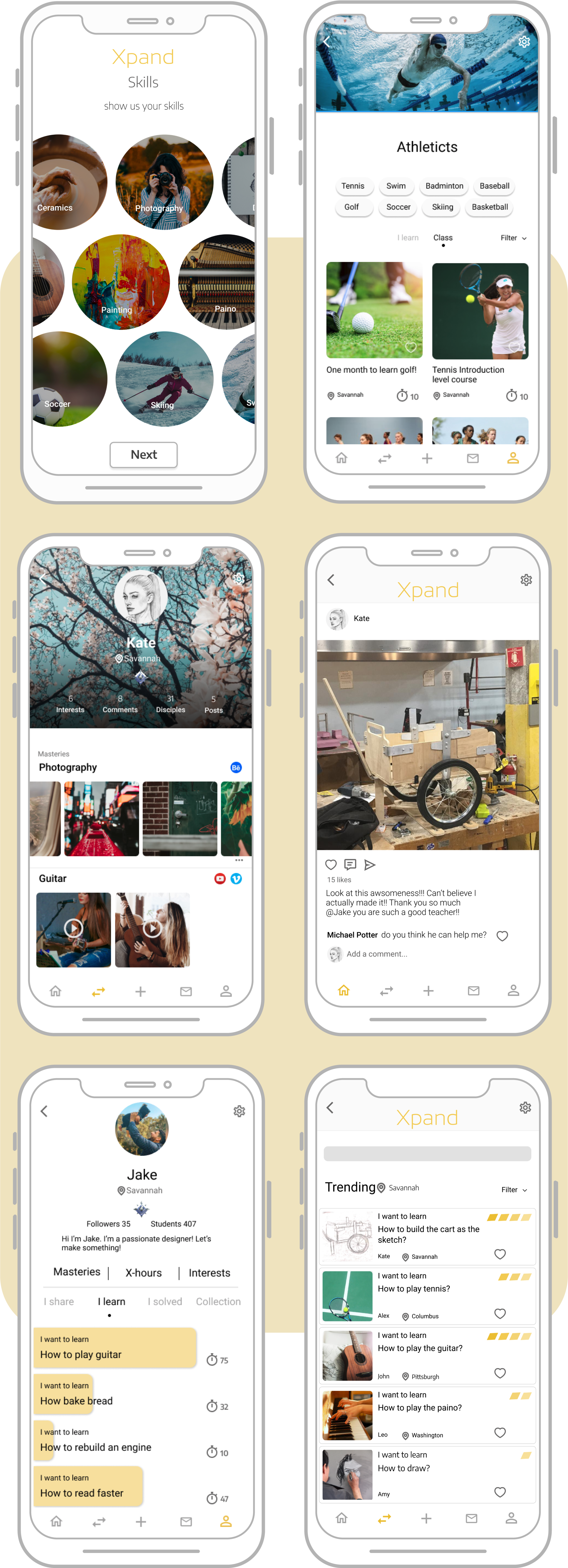 Six UI screens shown early (before most research/validation slides — possibly an intentional "preview the solution" hook):
- Onboarding: "show us your skills" with topic circles (Ceramics, Photography, Painting, Piano, Soccer, Skiing, etc.)
- "Athletics" browse screen with sport filters and listings
- Profile for "Kate" — 6 Interests, 8 Comments, 31 Disciples, 5 Posts; Masteries (Photography), Guitar section
- Post detail: Kate's finished cart, 15 likes, caption: "Look at this awsomeness!!! Can't believe I actually made it!! Thank you so much @Jake you are such a good teacher!!"
- Profile for "Jake" — Followers 35, Students 407, bio: "Hi I'm Jake. I'm a passionate designer! Let's make something!" Tabs: Masteries/X-hours/Interests. Posts with hour-values: "How to play guitar" (75), "How to bake bread" (32), "How to rebuild an engine" (10), "How to read faster" (47).
- "Trending" feed: "How to build the cart as the sketch?" (Kate, Savannah), "How to play tennis?" (Alex, Columbus), "How to play the guitar?" (John, Pittsburgh), "How to play the piano?" (Leo, Washington), "How to draw?" (Amy).
Note: "X-hours" is the UI's name for the time-banking currency system (elaborated in slide 024).
Assumptions (slide 013)
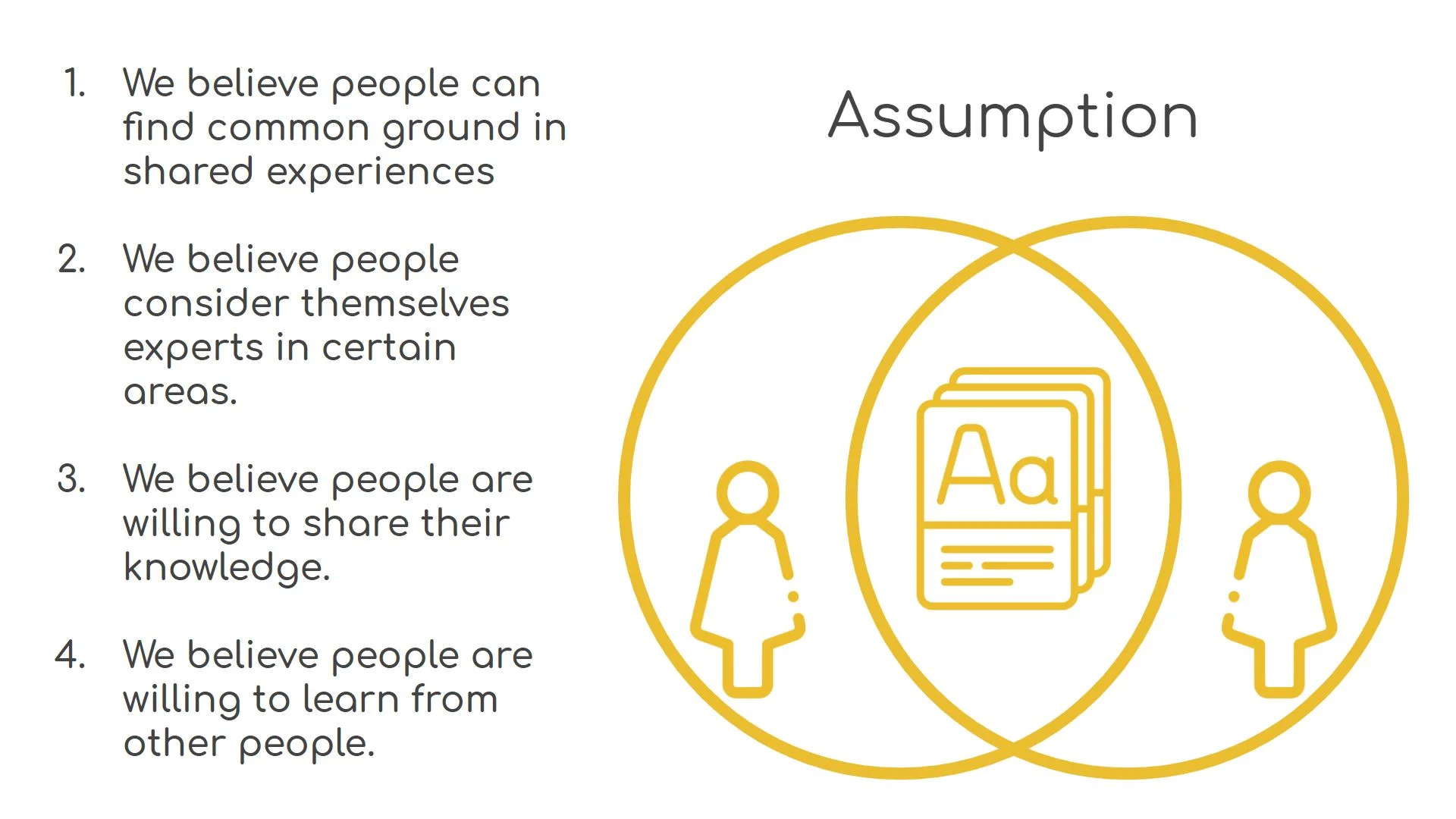
- We believe people can find common ground in shared experiences
- We believe people consider themselves experts in certain areas.
- We believe people are willing to share their knowledge.
- We believe people are willing to learn from other people.
Testing Our Assumptions (slides 014–018)
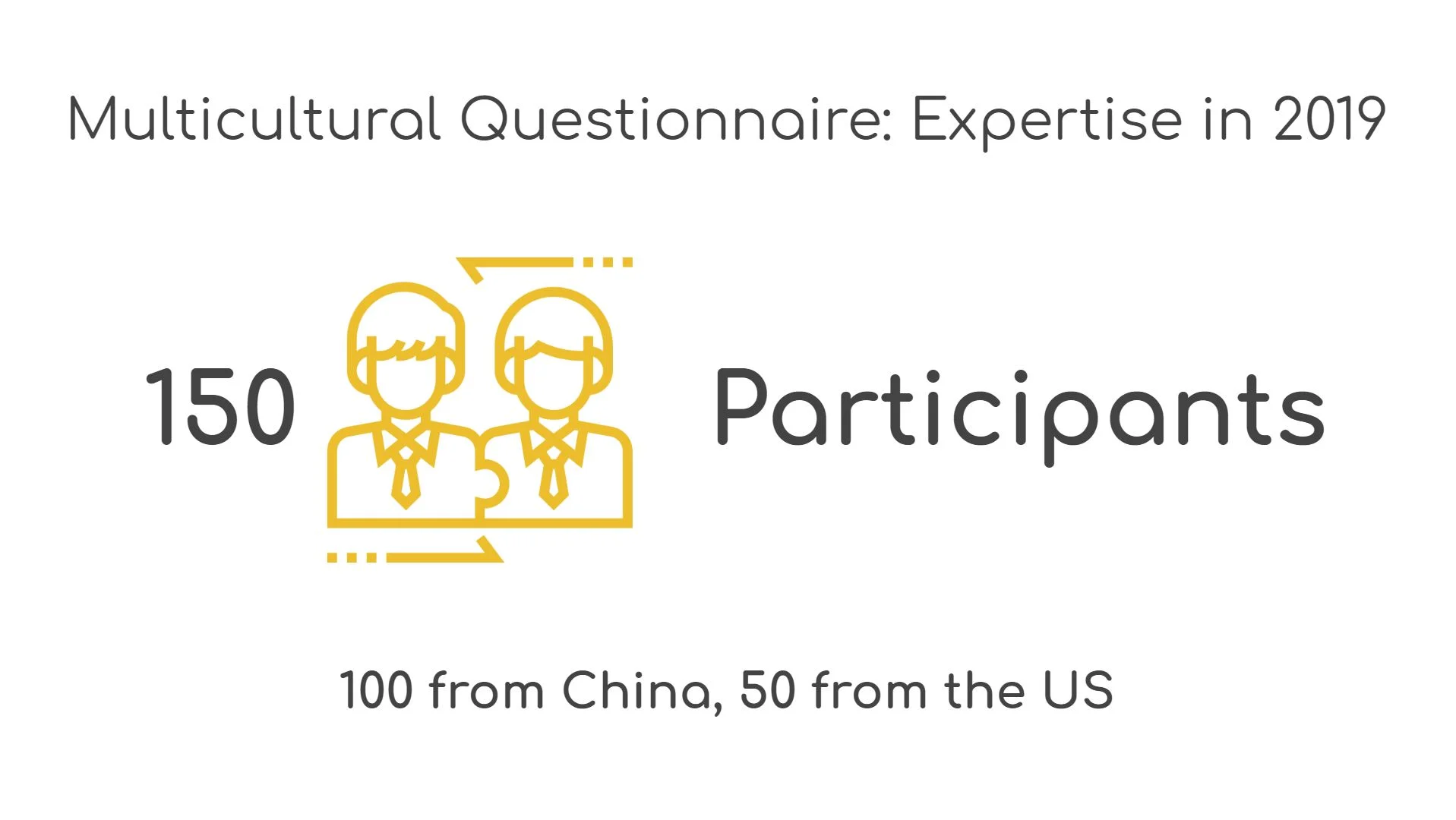
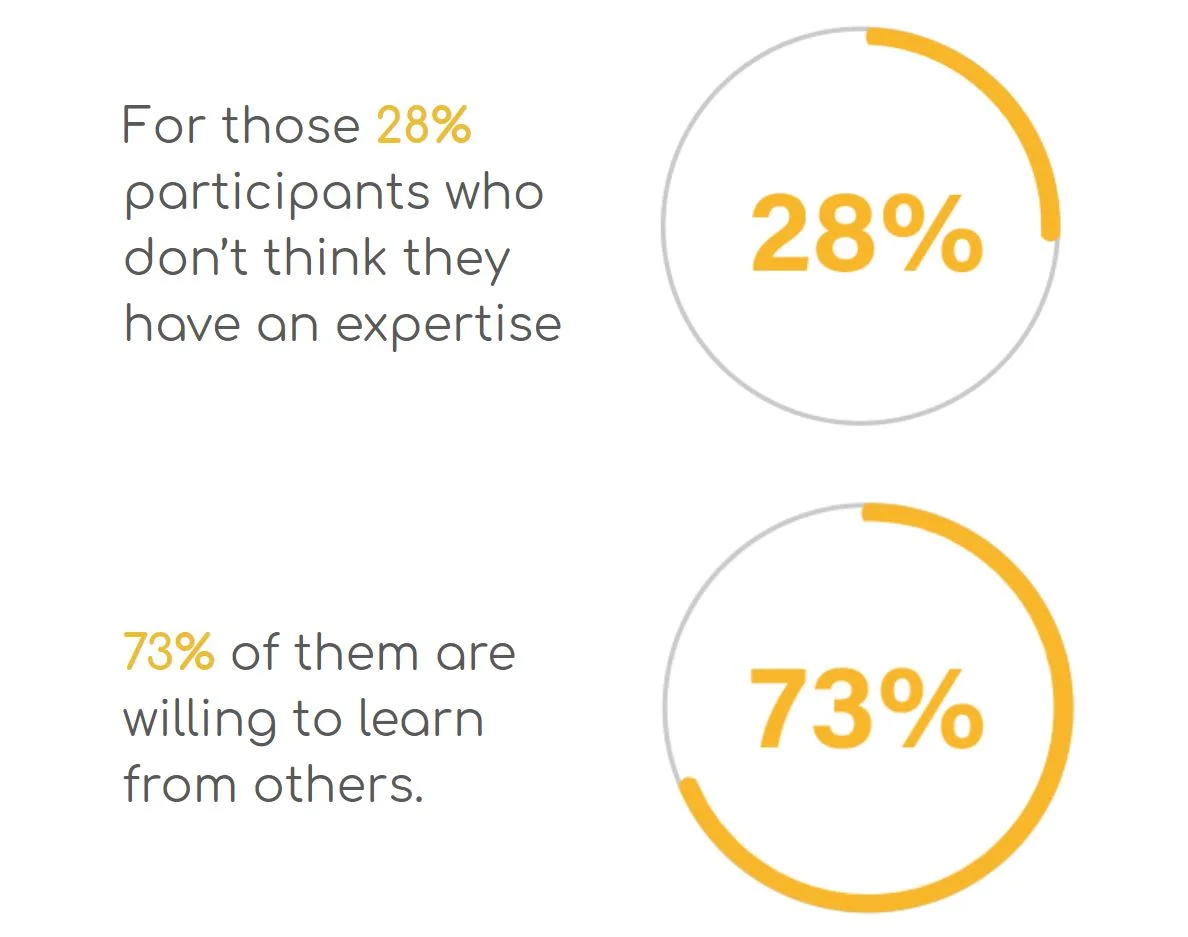
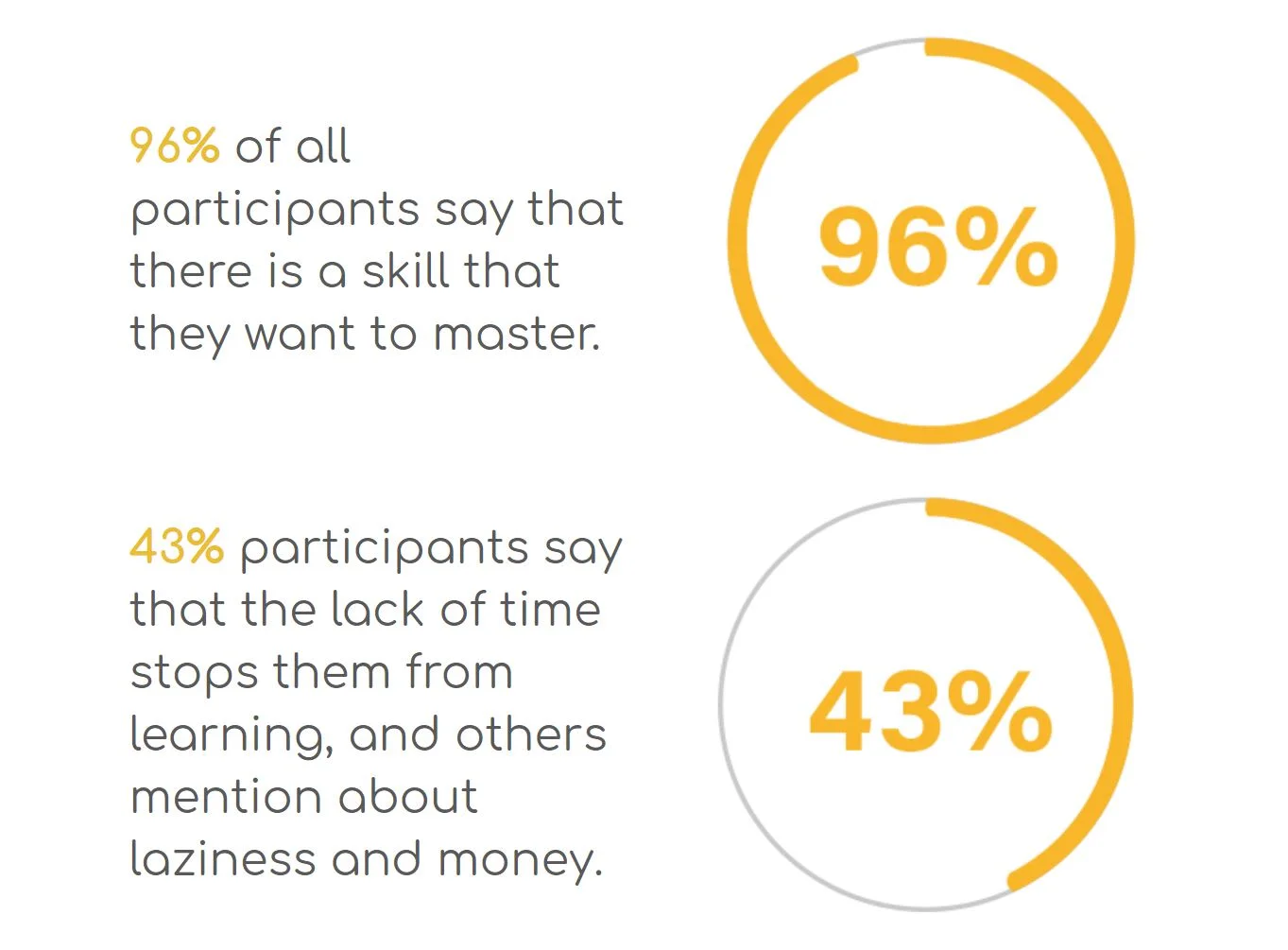 Multicultural Questionnaire: Expertise, 2019 — 150 participants (100 China, 50 US).
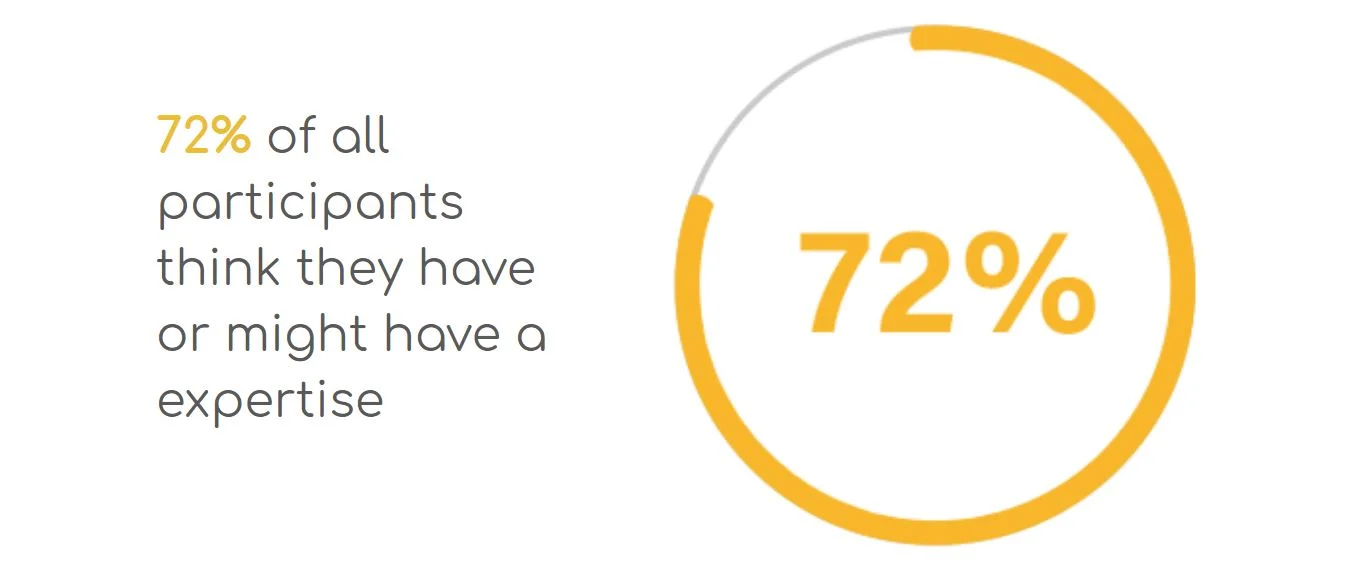
- 72% of all participants think they have or might have an expertise.
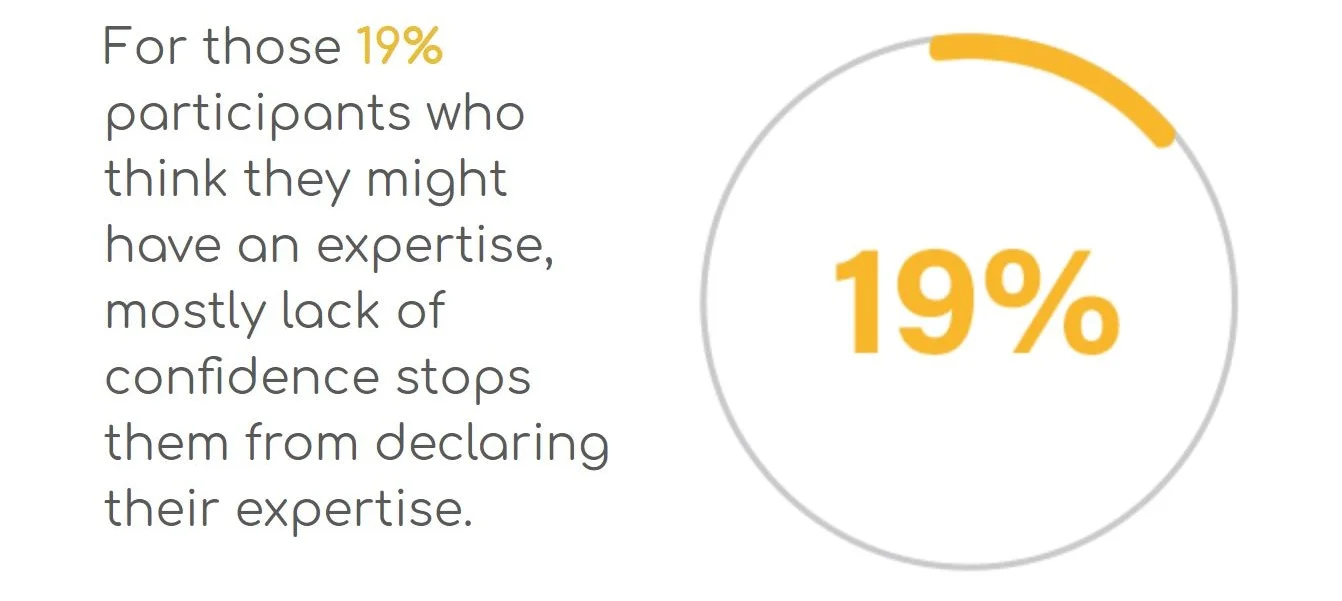
- For the 19% who think they might: "mostly lack of confidence stops them from declaring their expertise."
- For the 28% who don't think they have an expertise: 73% of them are willing to learn from others.
- 96% of all participants say there's a skill they want to master. 43% say lack of time stops them from learning, others mention laziness and money.
This directly validates the four assumptions and sets up the time/money design response below.
Synthesis & Ideation (slides 020–021, 028)
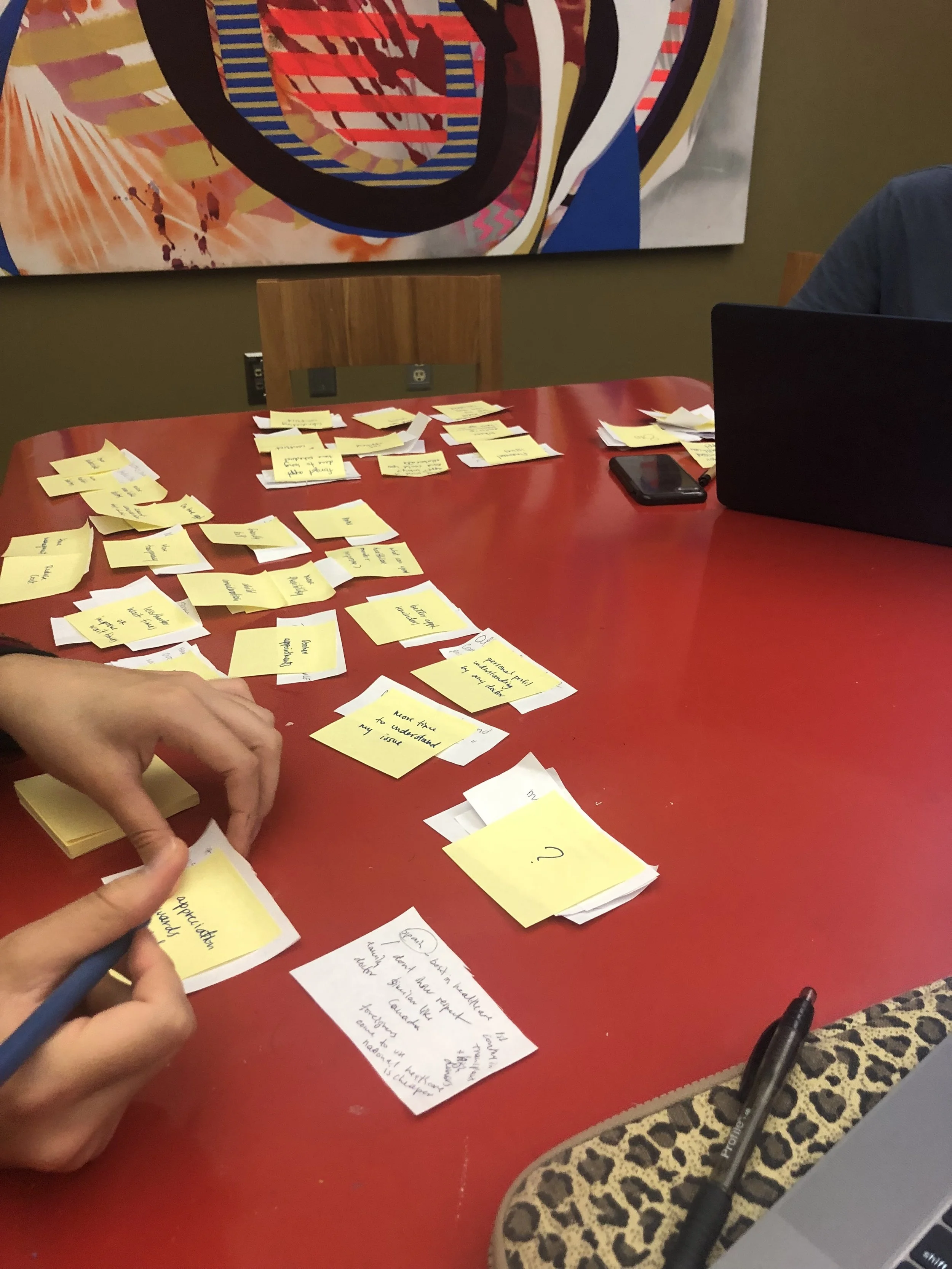
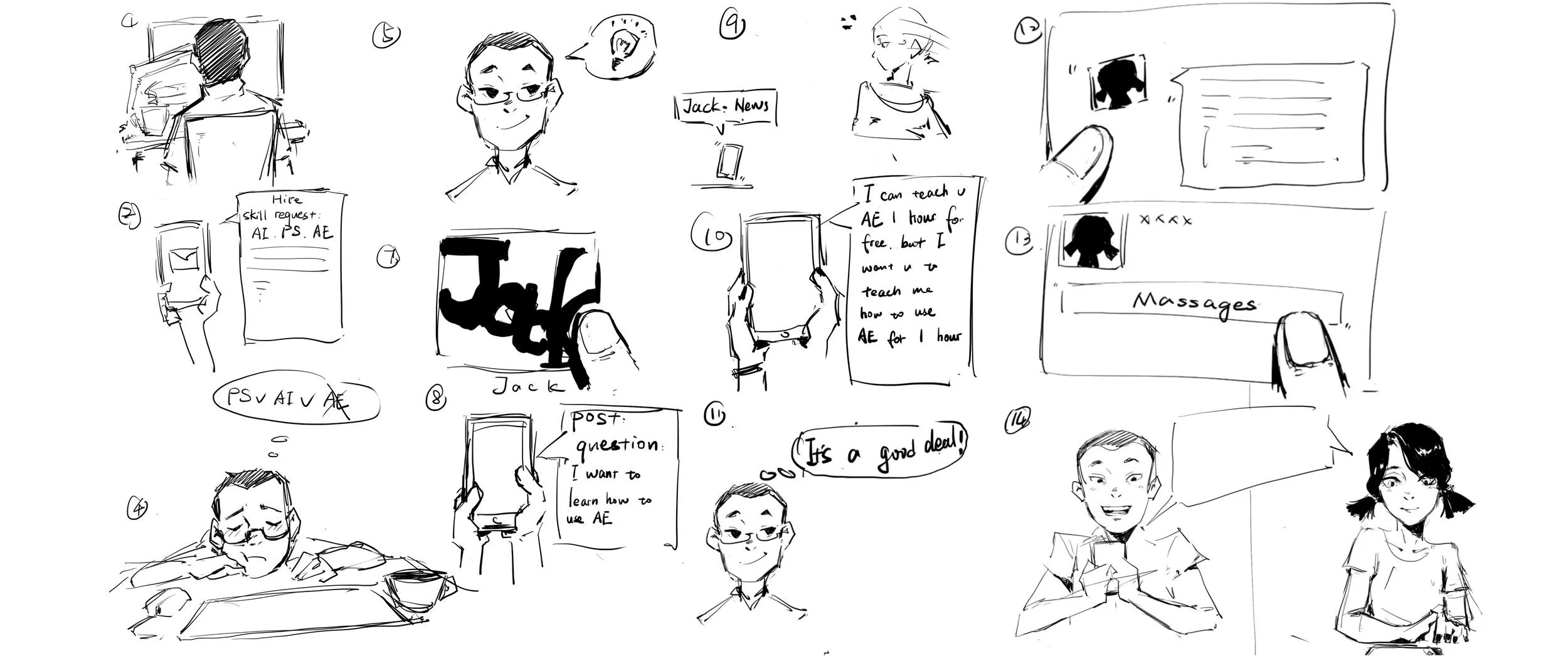
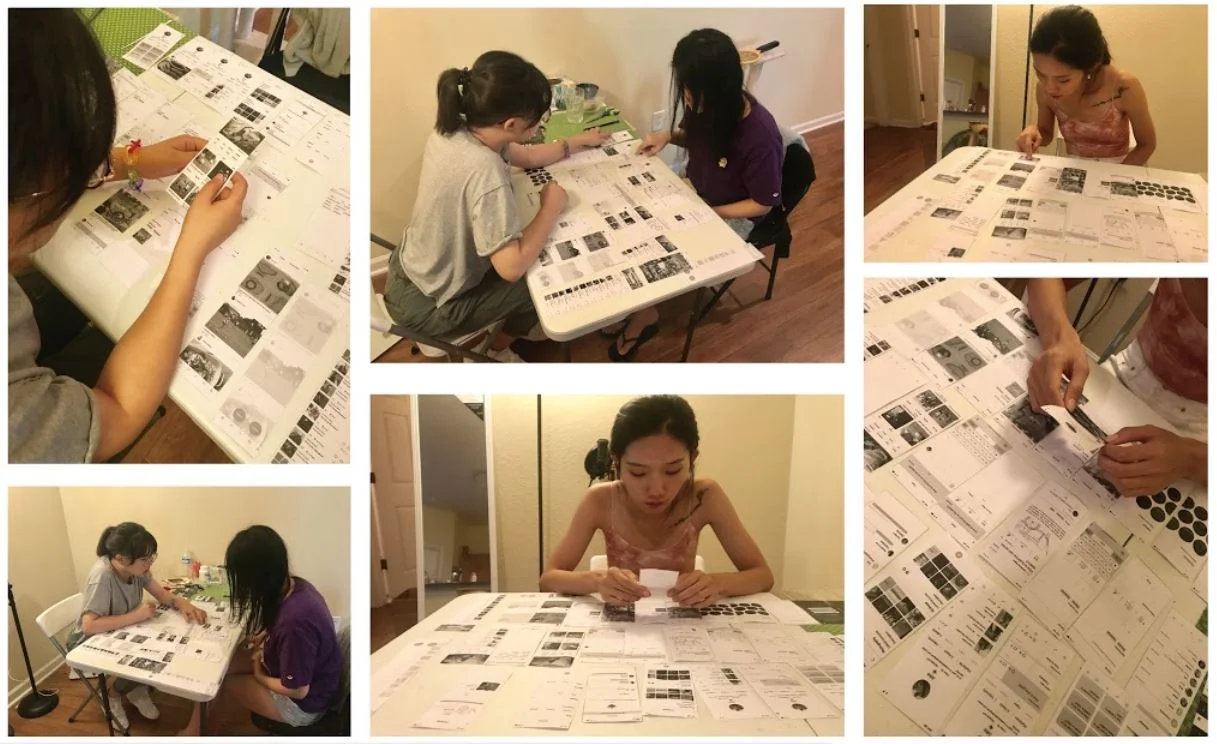 Affinity-diagramming workshop photos (sticky notes on a table). A 14-panel hand-drawn storyboard (021) pitches the core skill-trade mechanic: someone needing help with Adobe AI/PS/AE software gets offered "I can teach u AE 1 hour for free, but I want u to teach me how to use AE for 1 hour" — "It's a good deal!" Slide 028 (more affinity-diagramming photos) appears at the very end of the deck, likely out of order — probably belongs next to slide 020.
Designing the Solution — Wireframes (slides 022–023)
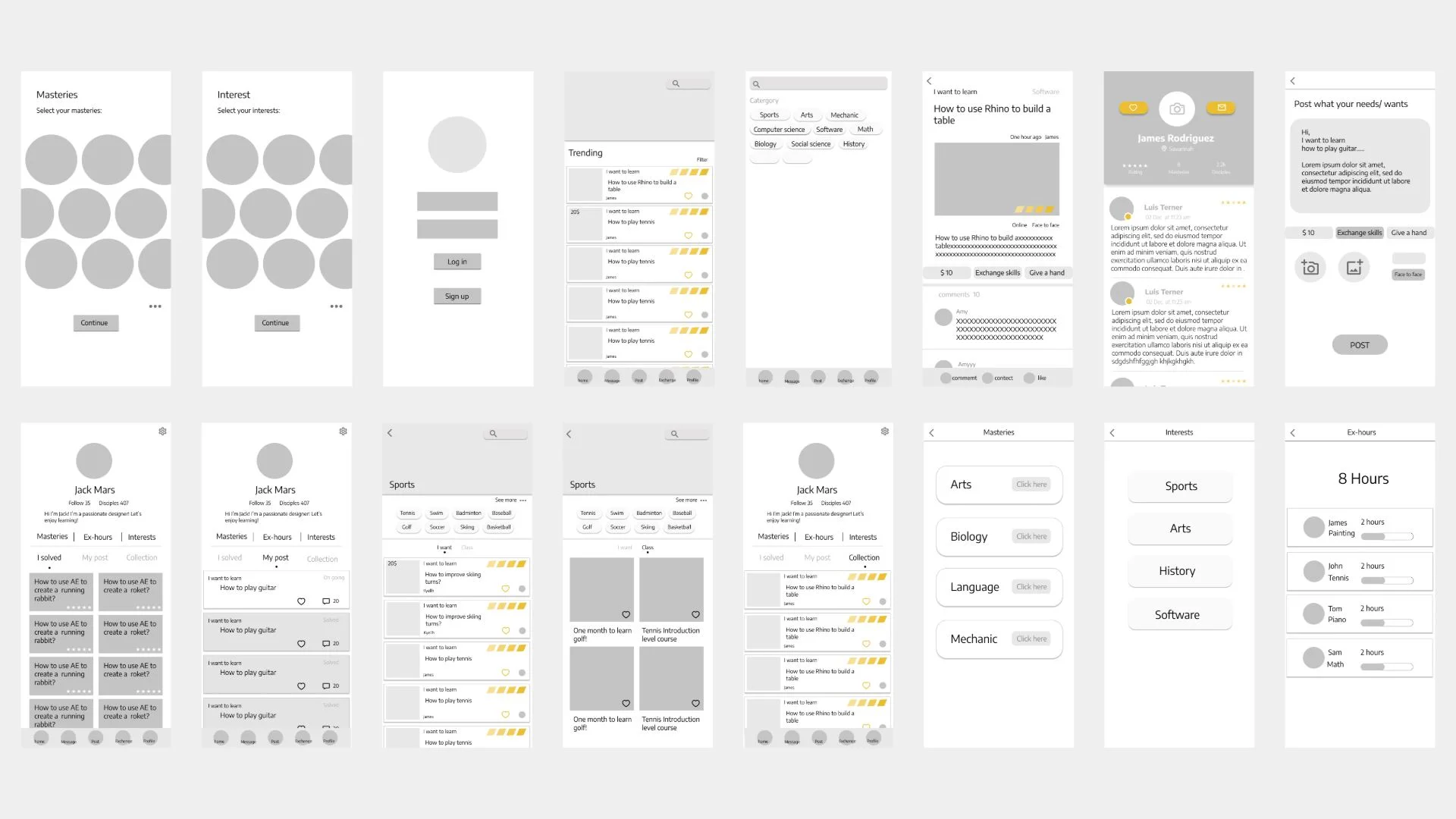
 Lo-fi wireframes (022) cover full app IA: onboarding (Masteries/Interests multi-select, Login/Signup), Trending feed, category/search, offering detail ("How to use Rhino to build a table"), full profile with reviews, request-creation, profile variants with post history, Sports/Masteries/Interests category screens, "Ex-hours" wireframe (banked total "8 Hours," list of people/hours: James–Painting–2h, John–Tennis–2h, Tom–Piano–2h, Sam–Math–2h).
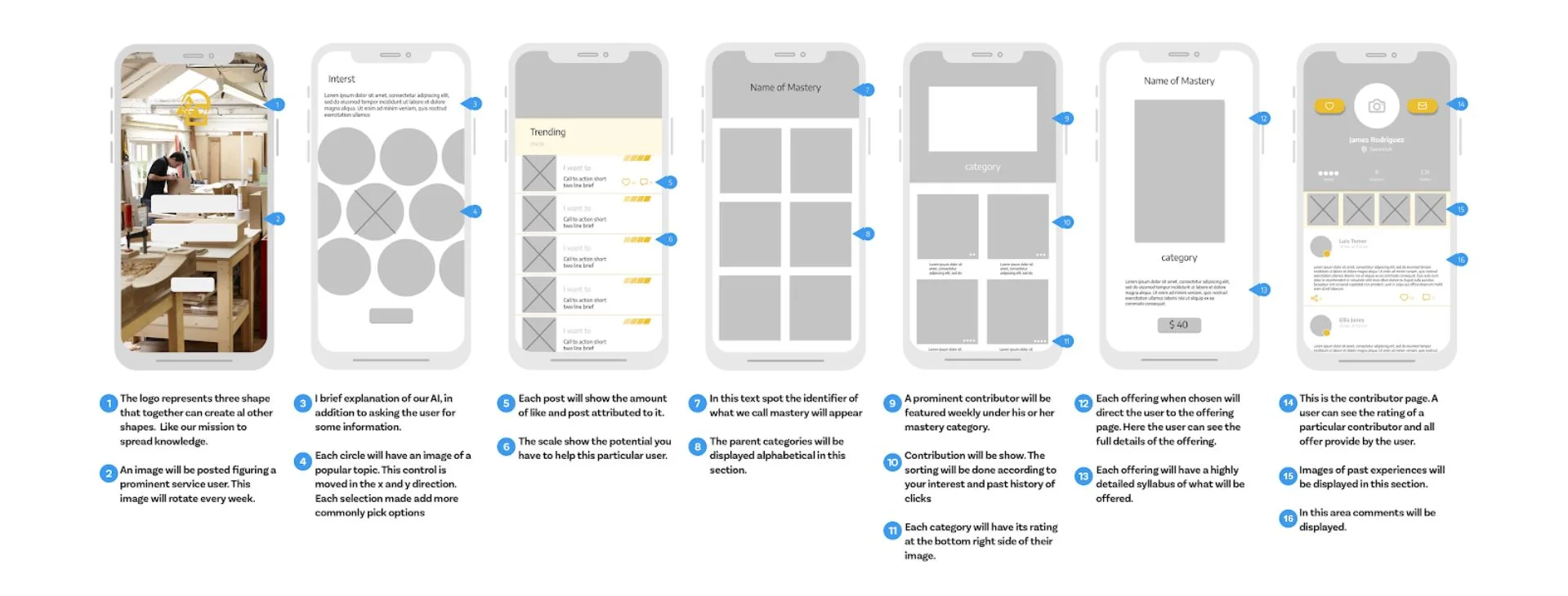
Annotated hi-fi wireframes (023) — design rationale callouts (verbatim, light grammar issues preserved):
- "The logo represents three shape that together can create al other shapes. Like our mission to spread knowledge."
- "An image will be posted figuring a prominent service user. This image will rotate every week."
- "A brief explanation of our app, in addition to asking the user for some information."
- "Each circle will have an image of a popular topic. This control is moved in the x and y direction. Each selection made add more commonly pick options"
- "Each post will show the amount of like and post attributed to it."
- "The scale show the potential you have to help this particular user."
- "In this text spot the identifier of what we call mastery will appear."
- "The parent categories will be displayed alphabetical in this section."
- "A prominent contributor will be featured weekly under his or her mastery category."
- "Contribution will be show. The sorting will be done according to your interest and past history of clicks"
- "Each category will have its rating at the bottom right side of their image."
- "Each offering when chosen will direct the user to the offering page. Here the user can see the full details of the offering."
- "Each offering will have a highly detailed syllabus of what will be offered."
- "This is the contributor page. A user can see the rating of a particular contributor and all offer provide by the user."
- "Images of past experiences will be displayed in this section."
- "In this area comments will be displayed."
Design Rationale: Time as Currency (slide 024)
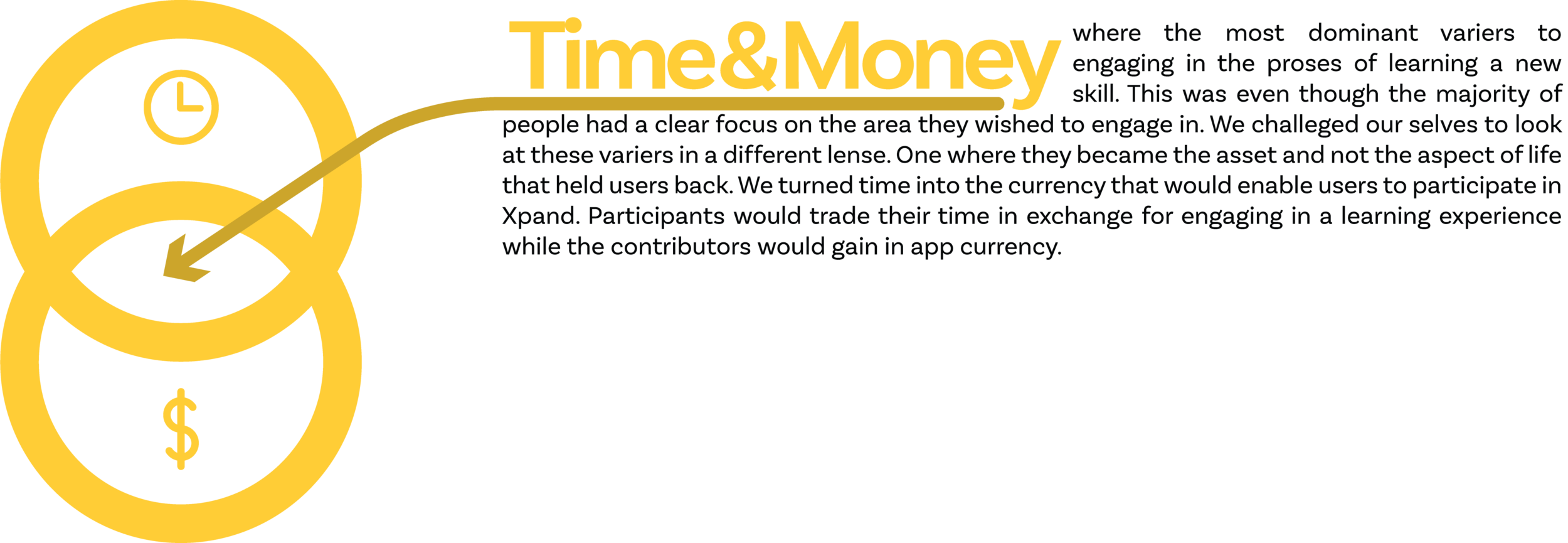
"[Time & Money] where the most dominant variers to engaging in the proses of learning a new skill. This was even though the majority of people had a clear focus on the area they wished to engage in. We challeged our selves to look at these variers in a different lense. One where they became the asset and not the aspect of life that held users back. We turned time into the currency that would enable users to participate in Xpand. Participants would trade their time in exchange for engaging in a learning experience while the contributors would gain in app currency."
(Likely missing the word "were" after the heading; original typos "variers"/"proses"/"challeged"/"lense" preserved — meaning is clear: time and money were the two biggest barriers to learning a new skill, so Xpand reframes time itself as the in-app currency.)
Xpand in Action — Final Product / Promo Video (slides 025–027)
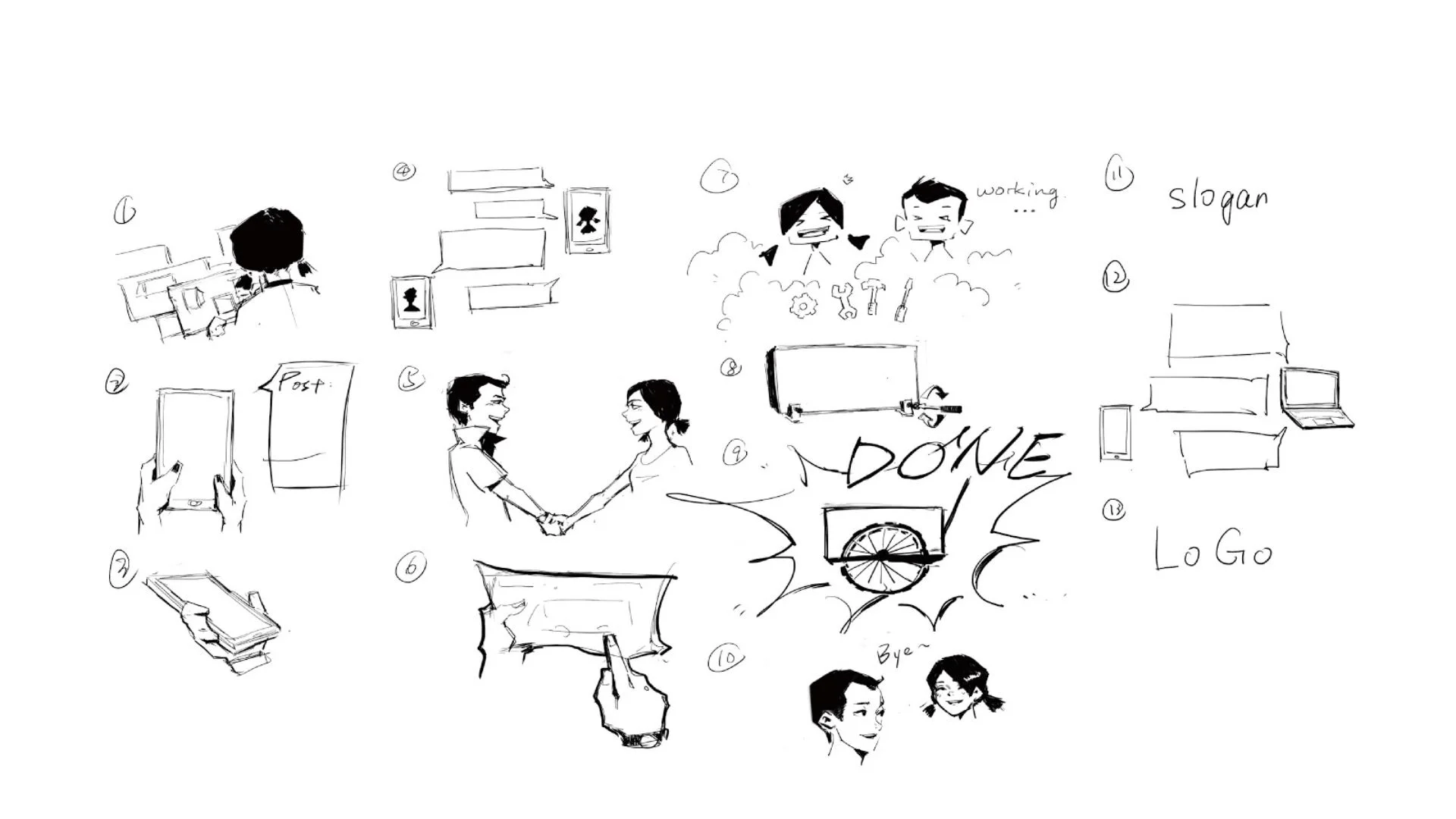
 13-panel storyboard (026) for a promo video: post a request → match → meet up → work together → finish the project → say goodbye → end card.
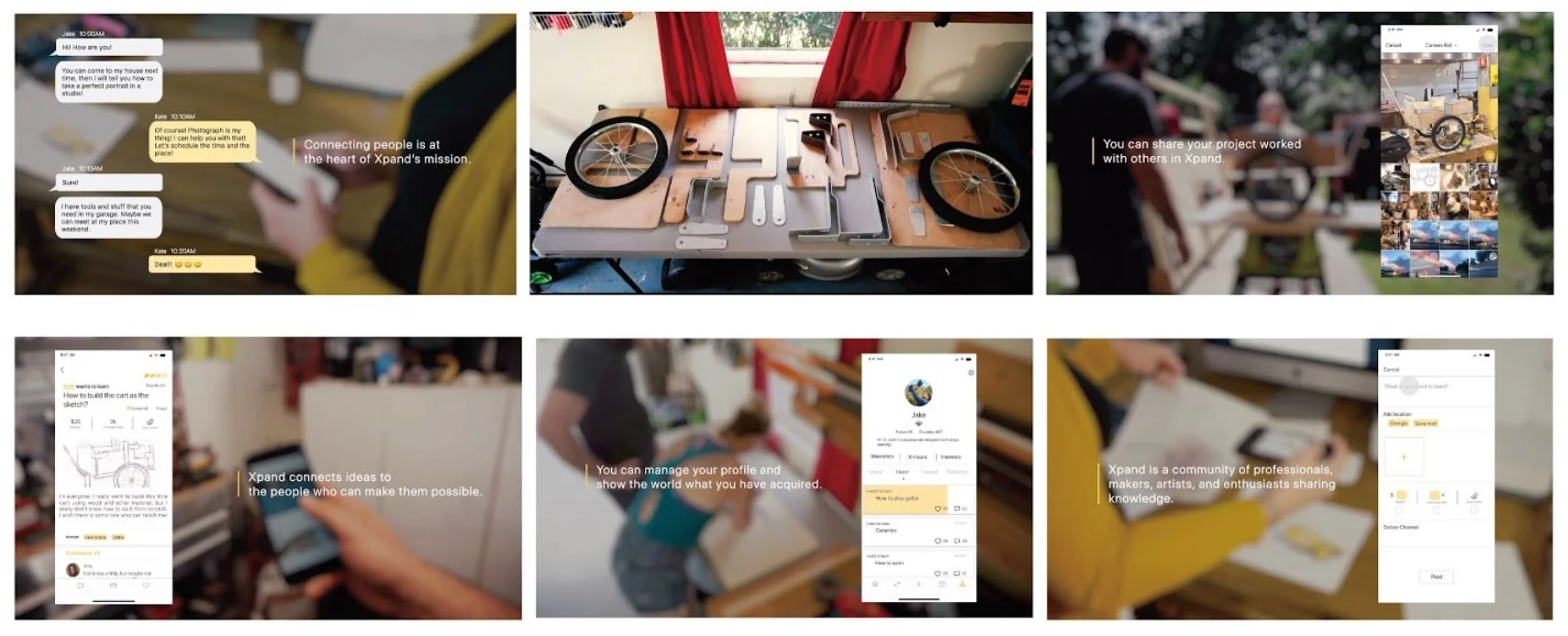
Video stills (025, 027) with captions (strong candidates for pull-quotes/feature callouts):
- "Connecting people is at the heart of Xpand's mission." — over a text exchange: "Hi! How are you!" / "You can come to my house next time, then I will tell you how to take a perfect portrait in a studio." / "Of course! Photography is my thing! I can help you with that! Let's schedule the time and the place!" / "Sure!" / "I have tools and stuff that you need in my garage. Maybe we can meet at my place this weekend." / "Deal!! 😊😊😊"
- "You can share your project worked with others in Xpand."
- "Xpand connects ideas to the people who can make them possible."
- "You can manage your profile and show the world what you have acquired."
- "Xpand is a community of professionals, makers, artists, and enthusiasts sharing knowledge."
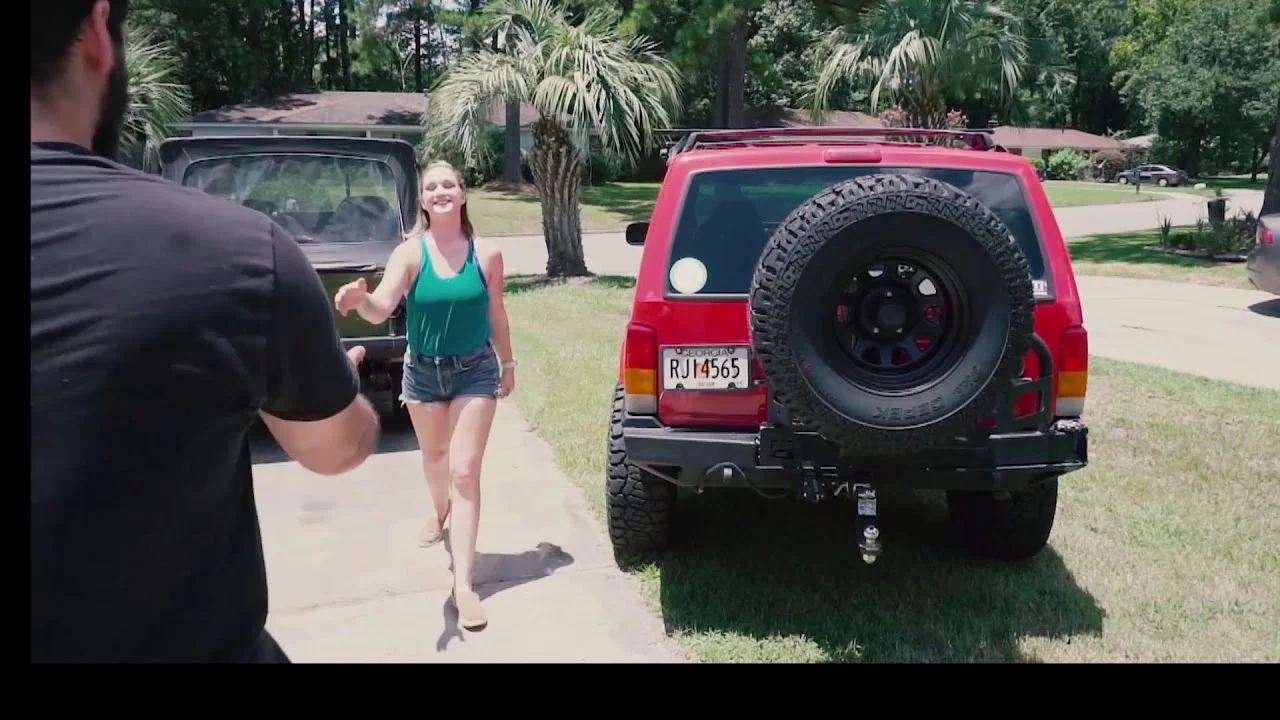
Slide 025: outdoor photo, two people (a man and a woman) high-fiving — depicts two users meeting in person for a skill exchange.
Flags for the rebuild
- Slide 005 (polished app mockups) sits early in the deck, before most research/validation — decide whether to keep as an early "preview" hook or move into the Solution section.
- Slide 008's 22.4%/77.6% gender split has no explicit label confirming which percentage maps to which gender — inferred from icon order only.
- Slides 011–012 are raw word-frequency spreadsheets, largely illegible at normal zoom — reference as "we ran a word-frequency analysis," don't try to reproduce the tables.
- Slide 020's handwritten sticky notes are only partially legible; one note about healthcare/doctor preferences was transcribed at low confidence.
- Slide 028 (more synthesis photos) appears after the finished product and promo video — likely out of order, probably belongs next to slide 020.
- No explicit outcome/results/reflection section exists in this deck at all — it ends with the promo video stills. If the new site's template expects an Outcome/Reflection section, this content doesn't exist in the source and should be omitted or written fresh (not fabricated).
- No explicit tagline/subtitle slide — the one-line summary above is synthesized from the deck's content, not a direct quote.
- Minor spelling/grammar issues preserved verbatim throughout (a expertise, create a roket, variers/proses/challeged/lense, project worked with others) — developer should lightly correct for final site copy.
Additional process photos